Brad's Ultimate New York Yankees Website - www.HistoryOfTheYankees.com
Harvey Frommer
Updated: May 2011
The Bucky Dent Home Run
By Harvey Frommer
Excerpt from Remembering Fenway Park: An Oral and Narrative History of the Home of the Boston Red Sox/Abrams 2011 - - now available in stores and on-line and direct from the author)
STEVE RYDER: Then all of a sudden:
BILL WHITE (GAME CALL) "Deep to left! Yastrzemski will not get it -- it's a home run! A three-run home run for Bucky Dent and the Yankees now lead . . . Bucky Dent has just hit his fourth home run of the year and look at that Yankees bench out to greet him..."
CARL YAZSTREMSKI: I've always loved Fenway Park. But that was the one moment I hated the place, the one moment the wall got back at us. I still can't believe it went in the net.
BILL LEE: Torrez threw that horseshit slider that is still sitting there in middle of the plate, and Bucky Dent hit right near the end of the bat. I couldn't believe he hit it out, but he did.
ROGER KAHN: My memory is Dent slamming a foul ball into his foot and hobbling around and there was a delay of several minutes. During that whole delay Mike Torrez did not throw a single pitch. Normally, you just throw to keep loose. Dent got a new bat from Mickey Rivers. And the first pitch Torrez threw after the break that may have been five minutes, was that shot to leftfield. You could see Yastrzemski thinking he could play the ball and kind of crumpling when the ball went out.
LEIGH MONTVILLE: It was a ball that everyone thought was going to be caught, a nothing kind of hit.
DON ZIMMER: When Bucky hit the ball, I said, "That's an out." And usually you know when the ball hits the bat whether it's short, against the wall, in the net or over the net. I see Yaz backing up, and when he's looking up, I still think he's going to catch it. When I see him turn around, then I know he's going to catch it off the wall. Then the ball wound up in the net.
MIKE TORREZ: I was so damn shocked.I thought maybe it was going to be off the wall. Damn, I did not think it was going to go out.
BUCKY DENT: When I hit the ball, I knew that I had hit it high enough to hit the wall. But there were shadows on the net behind the wall and I didn't see the ball land there. I was running from the plate because I thought I had a chance at a double. I didn't know it was a home run until the second-base umpire signaled it was a home run. It was an eerie feeling because the ballpark was dead silent.
STEVE RYDER: It was just a pop fly off Mike Torrez. It just made the netting. The crowd was just absolutely stunned, absolutely stunned.
Don Zimmer changed the Yankee shortstop's name to "Bucky F_____g Dent." Red Sox fans were even more vulgar in their language.
Yaz had two hits in that game, including a homer off Ron Guidry, but he also made the last out.
DAN SHAUGHNESSY: I was covering for the Baltimore Eagle Sun in the second or third row. The old press box was down low. I was downstairs later in the stands when Gossage got Yaz to pop up because we were getting ready to go to the locker room and it looked like they were going down and that was interesting how Sox fans in those days had a sense of gloom, anticipating. Whatever happened, it wasn't going to end well.
DICK FLAVIN: I was in a box seat right behind the Red Sox dugout. You could put your beer right on the roof. So I had a great look of Yaz coming off the field right after he popped up. He had his head down, anguish.
STEVE RYDER: I saw that popup up close. It was a fairly high one, you could say it was a homerun in a silo. it just ended the game ,and the people left in kind of a dejected attitude and demeanor. Whipped.
DON ZIMMER: Instead of going into the clubhouse, I sat in the dugout and watched their team celebrate.
DENNIS ECKERSLEY: Yaz was crying in the trainer's room. It was not as crushing for me because when you're 23 you think, well, we'll do it next year. We have such a good team. But if I knew what I know now, I would have been devastated. We never really got there again after that.
WALTER MEARS: Tip O'Neill went to Rome that fall and saw the Pope. When he came back he was at some function with Yaz and told him the Holy Father had spoken of him. Yaz wanted to know what the Pope had said.
" Tip," he said, "How the heck could Yastrzemski pop out in the last of the ninth with the tying run on third? "
After the game a Bucky Dent buddy called the Red Sox inquiring if the home-run ball was available. He was told that the net had been littered with balls from batting-practice home runs the "Bucky Dent ball" could not be identified amidst all the others.
JOE MOONEY: I got blamed for taking the ball Bucky Dent hit for the home run. I never touched it. I never spoke to Bucky Dent, but later I found out that he was accusing me. I know who took that ball he hit. But I'd never say nothing. We'll leave that to history.
Willie Mays Is 80 (From the Vault)
The month of May was always Willie Mays' time. Willie Howard Mays was born on May 6, 1931 in Westfield, Alabama - 69 years ago today.
The New York Giants called him up on the 15th of May in 1951 from Minneapolis in the American Association. He was bating .477 after 35 games.
Garry Schumacher, publicist for the Giants at that time, recalled the first time he ever saw Mays.
"The Giants were on their way from Chicago to Philadelphia to conclude the last three games of a road trip," Schumacher said. "I was by the front door of the Giants' office on Times Square. Suddenly, this kid comes in. There were always a lot of kids coming around; some of them wanted tickets and some wanted tryouts. He was carrying a few bats in one hand and a bag in the other that contained his glove and spikes. He was wearing the most unusual cap I ever saw, plaid colored. When I found out who he was, we bought him some clothes and then sent him to Philadelphia to join the club. He was wearing the new clothes when he left, but funny thing - he refused to take off that funny cap.
He made his major league debut with the Giants on May 25, 1951. But his start in the majors after just 116 minor leagues games was a shaky one. He was hitless in his first 12 at-bats, cried in the dugout and said, "I am not ready for this". He begged manager Leo Durocher to send him back down to the minors.
But "Leo the Lip" refused to listen to the pleas of the rookie center fielder just as another Giant manager John J. McGraw had refused to send a youthful Mel Ott to the minors.
"You're my center fielder as long as I am the manager of this team," Durocher said. "You're the best center fielder I have ever seen."
Mays' first home run was off the great Warren Spahn. He hit it over the roof of the Polo Grounds.
"We had a meeting of the pitchers," Spahn recalls. "We knew Mays was having trouble. I'll never forgive myself. We might have gotten rid of Willie forever if I'd only struck him out."
In Pittsburgh's old Forbes Field, Rocky Nelson blasted a drive 457 feet to deep dead center. Galloping back, Mays realized as his feet hit the warning track that the ball was hooking to his right side. The ball was sinking and Mays could not reach across his body to glove the drive. So just as the ball got to his level, Mays stuck out his bare hand and made the catch. It was an incredible feat.
Durocher told all the Giants to give Mays the silent treatment when he returned to the dugout. But Pittsburgh's General Manager Branch Ricky sent the Giant rookie a hastily written note: "That was the finest catch I have ever seen ... and the finest I ever expect to see".
There is that catch and so many others. There are also the images of Mays playing stickball in the streets of Harlem with neighborhood kids, running out from under his cap pursuing a fly ball, pounding one of his 660 career home runs, playing the game with a verve, a gusto, and an attitude that awed those who were around him.
"Willie could do everything from the day he joined the Giants," Durocher recalled.
"Everybody loved him," notes his former teammate Monte Irvin. "He was a rare talent. Having him on your team playing center field gave us confidence. We figured that if a ball stayed in the park, he could catch it."
Mays was The Natural. He led the NL in slugging percentage five times. He won the home run crown four times. Twice, he won the NL MVP Award.
"He lit up a room when he came in," Durocher said.
The superstar of superstars, the man they called the "Say Hey Kid" was on the scene for 22 major-league seasons. He is all over the record book and in the memory of so many baseball fans.
Happy Birthday, Willie Mays!
# # #
2011 marks Harvey Frommer's 36th consecutive year of writing sports books. A noted oral historian and sports journalist, the author of 41 sports books including the classics: "New York City Baseball,1947-1957" and "Shoeless Joe and Ragtime Baseball," his acclaimed REMEMBERING YANKEE STADIUM, an oral/narrative history was published in 2008 as well as a reprint version of his classic "Shoeless Joe and Ragtime Baseball."
Frommer's newest work REMEMBERING FENWAY PARK: AN ORAL AND NARRATIVE HISTORY OF THE HOME OF RED SOX NATION (Abrams) is his 41st sports book.
He is available for speaking engagements.
FROMMER SPORTSNET (syndicated) reaches a readership in the millions and is housed on Internet search engines for extended periods of time.
FOLLOW Harvey on Twitter: http://twitter.com/south2nd. Web: http://www.dartmouth.edu/~frommer.
FOLLOW Harvey on LinkedIn http://www.linkedin.com/profile/edit?trk=hb_tab_pro_top
*************************************************************************************************************
REMEMBERING FENWAY PARK: http://harveyfrommersports.com/remembering_fenway/
=================================================
"Remembering'' has everything a fan could want: iconic images, funny stories, and a sense of reverence. - BOSTON GLOBE
"A handsome coffee table book marks the centenary of the grand old park." -SPORTS ILLUSTRATED
"Gem of a book about a jewel of a ballpark -- --GEORGE F. WILL
"Worthy of its sacred subject.. Unforgettable." -DAN SHAUGHNESSY, BOSTON GLOBE
NEXT EVENT:
Greenwich CT
Saturday May 14th 2-3pm Greenwich CT Library Talk/Book Signing 101 West Putnam Avenue, Greenwich, CT. Marianne Weill, Events Coordinator (203.622.7933, mweill@greenwichlibrary.org). (250)
Dr. Harvey Frommer received his Ph.D. from New York University. Professor Emeritus, Distinguished Professor nominee, and recipient of the "Salute to Scholars Award" at CUNY where he taught writing for many years, he was cited in the Congressional Record and by the New York State Legislature as a sports historian and journalist. The prolific Frommer was also selected by Major League Baseball to be an Expert Witness in 2006 in a case involving trademark infringement.
His many sports
books include: Shoeless Joe and Ragtime Baseball, New York City Baseball:
1947-1957, the New York Yankee Encyclopedia, and autobiographies of sports
legends Nolan Ryan, Red Holzman and Tony Dorsett. The prolific Frommer is also
the author of A Yankee Century, Red Sox vs Yankees: The Great Rivalry (with
Frederic J. Frommer), and Five O'Clock Lightning: The 1927 Yankees. His
REMEMBERING YANKEE STADIUM will be published in fall 2008 and his REMEMBERING
FENWAY PARK is set for 2010 publication.
Along with his wife Myrna Katz Frommer, he also teaches in the MALS program at Dartmouth College the course Preserving the Past: Oral History in Theory and Practice. Harvey has also taught Sports Journalism in Theory and Practice at Dartmouth College.
The Frommers @ Dartmouth.edu - Myrna and Harvey are a wife and husband team who successfully bridge the worlds... more
Frommerluxurytravel-arts
- They are
travel writers who specialize in cultural history, dining, hotels and resorts,
and Jewish history...
More
HARVEY FROMMER ON SPORTS
THE BOOK REVIEW
"YANKEE FOR LIFE" & other reads
As we round third base in 2008 and head for home and 2009, there are all kinds of sports books out there vying for one's attention. Some are by big name authors and publishers; others are more modest entries. All have something of value.
"Yankee For Life" by the late Bobby Murcer with Glen Waggoner (HarperCollins, $24.95, 322 pages) is the bittersweet tale of a 17-year-major leaguer who was looked upon by many as the next Mickey Mantle.
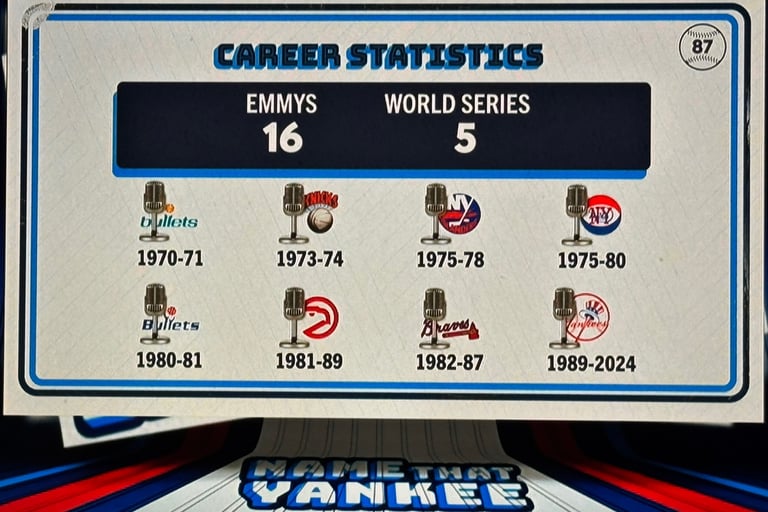
Murcer never met that promise but he was a fan favorite, especially Yankee fans. His post-career life was spent in the broadcasting booth where his sense of humor and Oklahoma drawl and knowledge of the game earned him three Emmys as one of the voices of the Yankees. Tragically, on Christmas Eve 2006, the affable Murcer was diagnosed with a malignant brain tumor. His recent passing saddened millions. "Yankee For Life" is his story told honestly, humorously and unflinchingly.
Josh Hamilton's "Beyond Belief" with Tim Keown (Faith Words, $23.95, 257 pages) is the uplifting story of one of the most talented players n the big leagues today who came back from four years of struggle with drug addiction, suspensions, very down times. The book's sub-title is "finding the strength to come back" and that is what Hamilton is all about.
Bill James is at it again and those into his kind of work will be elated. From Acta Sports, priced at $23.95, 506 pages, paper), the "Bill James Handbook" is a mother and father lode of relevant and up to date stats on every major league team, player and manager through 2008.
From Triumph comes two books focused on similar approaches with different subject matter. "Then Bud Said to Barry Who Told Bob..." by Jeff Snook (Triumph Books, $22.95, 284 pages, includes CD) is a collection of Oklahoma Sooner gridiron tales. "Then Osborne Said to Rozier..." by Steve Richardson (Triumph, $22.95, 200 pages, includes CD) is a slimmer collection of stories - these about Nebraska Cornhusker football. For fans of these teams - the books are a must.
HIGHLY NOTABLE: For fans of basketball comes new film "The First Basket" that carefully evokes the history of Jews and basketball at the beginning of the 20th century. Ossie Schectman, a Jewish kid from Brooklyn , made the first basket for the New York Knickerbockers back in 1946 in a league that preceded the NBA. The film showcases this and all kinds of other little known facts and events showing the unusual connection between Jews and basketball. Director David Vyorst has done a brilliant job. There are screenings in New York City at:
http://www.villageeastcinema.com/angelika_index.asp?hiD=166> EAST CINEMAIn Los Angeles: <
http://www.laemmle.com/> Laemmle's Town Center,Encino<
http://www.laemmle.com/viewtheatre.php?thid=8> LAEMMLE'S Fallbrook 7 in West Hills======================================================================
Harvey Frommer is his 33rd consecutive year of writing sports books. The author of 40 of them including the classics: "New York City Baseball,1947-1957" and "Shoeless Joe and Ragtime Baseball," his REMEMBERING YANKEE STADIUM, an oral/narrative history (Abrams, Stewart, Tabori and Chang) was published in 2008 as well as a reprint version of his "Shoeless Joe and Ragtime Baseball."
Frommer sports books are available direct from the author - discounted and autographed.
FROMMER SPORTSNET (syndicated) reaches a readership in excess of one million and appears on Internet search engines for extended periods of time.
*REMEMBERING YANKEE STADIUM: OPENING DAY 1923
By Harvey Frommer
(As the games at Yankee Stadium dwindle to a precious few - -for your reading pleasure adapted from REMEMBERING YANKEE STADIUM: AN ORAL AND NARRATIVE HISTORY OF THE HOUSE THAT RUTH BUILT, STC, ABRAMS)
Jacob Ruppert always insisted "Yankee Stadium was a mistake, not mine, but the Giants."
And in truth, had it not been for the Giants, there might never have been a Yankee Stadium.
Beginning life as the Baltimore Orioles in 1901, the franchise moved to Manhattan in 1903. Named the Highlanders, they played at Hilltop Park in Washington Heights for a decade. In 1913, the Yankees as they were now known were tenants of the New York Giants at the Polo Grounds. The landlord Giants and the tenant Yankees never got along.
Ruth's Yankees were a magnet drawing more than a million each season from 1920 to 1922. Never had the Giants drawn a million fans. Angered and annoyed at the gate success of Babe Ruth and Company, the Giants told the Yankees to look around for other baseball lodgings.
Ruppert and Huston suggested the Polo Grounds be demolished and replaced by a 100,000 seat stadium to be used by both teams as well as for other sporting events. Nothing came of the suggestion.
So the duo set about to create a new ballpark. Shaped along the lines of the Roman Coliseum, it would be the greatest and grandest edifice of its time. Many sites and schemes were considered. One idea was to build atop railroad tracks along the West Side near 32nd Street. The Hebrew Orphan Asylum, at Amsterdam Avenue and 137th Street, was a serious contender. Long Island City in Queens was also given some consideration.
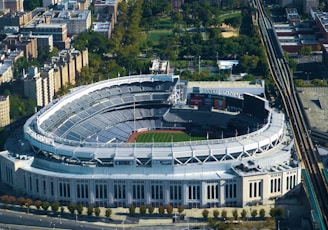
Finally, on February 6, 1921, a little more than year after the Yankees had acquired Ruth from the Red Sox, a Yankee press release announced that ten acres in the west Bronx, City Plot 2106, Lot 100, land from the estate of William Waldorf Astor, had been purchased for $675,000 (just under $8 million in 2007 dollars). The site sat directly across the Harlem River, less than a mile from and within walking distance of the home of the New York Giants, at the mouth of a small body of water called Crowell's Creek.
Some noted the site was strewn with boulders and garbage. Others criticized the choice as being too far away from the center of New York City. Some dubbed the plan "Rupert's Folly," believing that fans would never venture to a Bronx-based ballpark.
"They are going up to Goatville," snapped John J. McGraw, manager of the Giants. "And before long they will be lost sight of. A New York team should be based on Manhattan Island."
Ruppert never publicly responded to McGraw's criticism. But he did request newspapers to print the address of Yankee Stadium in all stories. And for the first game at his new baseball palace, he included on each ticket stub:
"Yankee Stadium, 161st Street and River Avenue."
Design responsibilities for the new "yard" were handed over to the Osborn Engineering Company of Cleveland, Ohio. The White Construction Company of New York was awarded the construction job which Huston oversaw. Ever demanding and meticulous, Ruppert mandated that the massive project be completed "at a definite price" $2.5-million ( about $29-million in 2007 dollars) and by Opening Day 1923.
Ground was broken on May 5, 1922. Sixteen days later Ruppert bought out Huston's share of the Yankees for $1,500,000. "The Prince of Beer" was now sole owner, a driven and driving force behind the vision of the new home.
A millionaire many times over, Ruppert enjoyed giving orders and having them followed to the letter. He lived at 1120 Fifth Avenue in Manhattan in a 15 room townhouse. He also had a castle on the Hudson.
Some thought his new baseball park should be named "Ruth Field." Ruppert, however, was adamant that it be known as "Yankee Stadium." It would be the first ballpark to be referred to as a stadium.
Original architectural plans called for a triple-decked park roofed all the way around. An early press release explained that the new ballpark would be shaped like the Yale Bowl, enclosed with towering embattlements making all events inside "impenetrable to all human eyes, save those of aviators." Those without tickets would be unable to catch even a glimpse of the action.
However, that initial lofty design was quickly scaled down. It was thought those plans would create too foreboding a sports facility, being too much a tower and not a place to play baseball, being a place where the sun would hardly ever shine. Instead the triple deck would stop at the foul poles.
And Jacob Ruppert notwithstanding, action on the field of play would be visible from the elevated trains that passed by the outfield, from the 161st Street station platform as well as from roofs and higher floors of River Avenue apartment houses that would be built.
Fortunately, a purely decorative element survived the project's early downsizing. A 15-foot deep copper frieze would adorn the front of the roof which covered much of the Stadium's third deck. It would become the park's signature feature.
The new stadium, virtually double the size of any existing ball park, favored left-handed power; the right-field foul pole was only 295 feet from home plate (though it would shoot out to 368 by right center). The left- and right-field corners were only 281 feet and 295 feet, but left field sloped out dramatically to 460 feet. Center field was a monstrous 490 feet away.
A quarter-mile running track that doubled as a warning track for outfielders surrounded the field. Under second base, a 15-foot-deep brick-lined vault containing electrical, telephone, and telegraph connections was put in place for boxing events.
Three concrete decks extended from behind home plate to each corner. There was a single deck in left-center and wooden bleachers around the rest of the outfield. The new stadium had the feel of a gigantic horseshoe. The 10,712 upper-grandstand seats and 14,543 lower grandstand seats were fixed in place by 135,000 individual steel castings on which 400,000 pieces of maple lumber were fastened by more than a million screws. Total seating capacity was 58,000, enormous for that time.
The Yankee bullpen was in left center. The Yankee dark green dugout was on the third base side. Bats were lined up at the top of the dugout stairs. There was a record eight toilet rooms for men and as many for women.
As was usual in that era, each white foul line extended past home plate. There was also a dirt "pathway" leading from the mound to home plate.
On Wednesday April 18, 1923, "The House That Ruth Built" opened for business. It had been built on almost the same spot where baseball had begun in the Bronx, a place where the Unions of Morrisania had played and close to where the old Melrose Station of the Harlem Railroad was located. The original street address was 800 Ruppert Place.
"Governors, general colonels, politicians, and baseball officials," The New York Times reported, "gathered solemnly yesterday to dedicate the biggest stadium in baseball."
True to Jake Ruppert's mandate and vision - "The Yankee Stadium," as it was first called, had been constructed at a cost of $2.5 million in just 185 working days.
The reaction to the newest playing field in the major leagues was over the top. A Philadelphia newsman declared: "It is a thrilling thought that perhaps 2,500 years from now archaeologists, spading up the ruins of Harlem and the lower Bronx, will find arenas that outsize anything that the ancient Romans and Greeks built."
Opening Day was, appropriately, Red Sox versus Yankees. A massive crowd assembled for the most exciting moment in the history of the Bronx. The day was chilly. Many in the huge assemblage were bundled up with heavy sweaters, coats, fedoras and derbies although some, in the spirit of the moment, wore dinner jackets.
The announced attendance was 74,217, later scaled back to 60,000. The Fire Department ordered the gates closed and 25,000 were denied entrance. Those unable to get inside soldiered up outside against the cold listening to the noise of the crowds and the martial beat of the Seventh Regiment Band directed by the famed John Phillip Sousa.
Red Sox owner Harry Frazee walked on the field side-by-side with Jake Ruppert who always claimed that his idea of a great day at the ballpark, was when "the Yankees score eight runs in the first inning, and then slowly pulled away." Yankees and Red Sox were escorted by the band to the flagpole in deep centerfield, where the home team's 1922 pennant and the American flag were raised.
Ruppert then took a seat in the celebrity box where Baseball Commissioner Kenesaw Mountain Landis, New York State Governor Al Smith, and New York City Mayor John Hylan were waiting for the game to begin.
At 3:25 Babe Ruth was presented with an oversized bat handsomely laid out in a glass case.
At 3:30 Governor Al Smith tossed out the first ball to Yankee catcher Wally Schang.
At 3:35 home plate umpire Tommy Connolly shouted: "Play ball!"
The temperature was a brisk 49 degrees. Wind blew dust from the dirt road leading to the Stadium and whipped away at pennants and hats.
In the third inning with Whitey Witt and Joe Dugan on base, George Herman "Babe" Ruth stepped into the batter's box. He had said: "I'd give a year of my life if I can hit a home run in the first game in this new park." Boston pitcher Howard Ehmke threw a slow pitch. Bam! Ruth slugged the ball on a line into the right-field bleachers - the first home run in Yankee Stadium history.
The New York Times called it a "savage home run that was the real baptism of Yankee Stadium."
Sportswriter Heywood Broun remarked: "It would have been a home run in the Sahara Desert."
Crossing home plate, removing his cap, extending it, Ruth waved to the standing, screaming crowd.
LEIGH MONTVILLE: Babe Ruth always said that of all the home runs he hit, his favorite home run was the one he hit the day they opened Yankee Stadium, the ballpark that was kind of built for him.
The game moved on. Yankee stalwart "Sailor" Bob Shawkey, a red sweatshirt under his jersey, fanned five, walked two, allowed but just three hits, and pitched the Yankees to a 4-1 victory.
HARVEY FROMMER ON SPORTS
*YANKEE STADIUM FIRSTS (a very partial list)
As the days draw closer to a precious few for Yankee Stadium, herewith some "firsts" on the big ballpark in the Bronx that has been with us since 1923.
First regular season game at Yankee Stadium, April 18, 1923, a 4-1 win over Boston.
First pitch thrown in Yankee Stadium, Bob Shawkey, Yankees, April 18, 1923.
First batter at Yankee Stadium, Chick Fewster, Red Sox April 18, 1923.
First hit at Yankee Stadium, George Burns, Red Sox April 18, 1923, second inning single.
First Yankee hit at Yankee Stadium, Aaron Ward April 18, 3rd-inning single.
First error, Babe Ruth, April 18, dropped fly ball in 5th inning.
First home run in Yankee Stadium, Babe Ruth hits a two-run shot in third inning off Boston's Howard Ehmke in a 4-1 Yankee victory, April 18, 1923.
First Yankee winning pitcher in World Series, Joe Bush, October 14, 1923.
First loss at Yankee Stadium, 4-3 to Washington , April 22, 1923.
First World Series game in Yankee Stadium, first one heard on a nationwide radio network, October 10, 1923.
First World Series home run at Yankee Stadium, Casey Stengel of the New York Giants hit an inside-the-park shot in Game 1 of the 1923 World Series.
First player to have his number retired, Lou Gehrig, #4, on Lou Gehrig Appreciation Day, July 4, 1939.
First night game at Yankee Stadium, May 28, 1946, a 2-1 loss to Washington.
First World Series pinch-hit home run, Yogi Berra against the Brooklyn Dodgers, Game 3 of the 1947 World Series.
First Yankee Stadium day game completed with lights, August 29, 1950.
First Yankees game behind the microphone for Bob Sheppard, April 17, 1951, New York Yankees vs. Boston Red Sox.
First home game outside of Yankee Stadium since 1922, April 6, 1974, as the Yanks begin playing the first of two seasons at Shea Stadium.
First home run at refurbished Yankee Stadium, Dan Ford of Minnesota, April 15, 1976.
First Yankee winning pitcher at refurbished Yankee Stadium, Dick Tidrow, April 15, 1976.
First home run by a Yankee at refurbished stadium, Thurman Munson, April 17, 1976.
First championship series game at Yankee Stadium, October 12, 1976, a 5-3 win over Kansas City.
First World Series game played by Yankees at night, October 17, 1976, at Cincinnati, a 4-3 loss to Reds.
First night World Series game at Yankee Stadium, October 19, 1976, a 6-2 loss to Cincinnati.
First team to host both the All Star Game and World Series in the same season, 1977.
First pitcher to throw a regular-season perfect game at Yankee Stadium, David Wells May 17, 1998.
First time a U.S. President visits Yankee Stadium during the World Series, George W. Bush, who threw out the first ball, Game 3, October 30, 2001 First November World Series Game, November 1, 2001, Yankees beat Arizona Diamondbacks, 3-2, at the Stadium.
First team in postseason history to win two straight games when trailing after eight innings, 2001 World Series, games four and five.
*Adapted from the just published REMEMBERING YANKE STADIUUM: AN ORAL AND NARRATIVE HISTORY OF THE HOUSE THAT RUTH BUILT Harvey Frommer is his 33rd consecutive year of writing sports books. The author of 40 of them including the classics: "New York City Baseball,1947-1957" and "Shoeless Joe and Ragtime Baseball," his REMEMBERING YANKEE STADIUM, an oral/narrative history (Abrams, Stewart, Tabori and Chang) was published in September 1, 2008 as well as a reprint version of his "Shoeless Joe and Ragtime Baseball.".
Frommer sports books are available direct from the author - discounted and autographed.
FROMMER SPORTSNET (syndicated) reaches a readership in excess of one million and appears on Internet search engines for extended periods of time.
Harvey Frommer on Sports
*Yankee Stadium Prisms and Sidebars
(A Very Partial List.)
As the days draw
closer to a precious few for Yankee Stadium, herewith some oddities, factoids
and singular information on the big ballpark in the Bronx that has been with us
since 1923.
Ron Guidry was a good drummer and once kept a trap set at Yankee Stadium. He
played in a post-game concert with the Beach Boys.
Outside the stadium is a 120-foot high baseball bat with Babe Ruth’s signature
and the
A Letter to Don Larsen:
"Dear Mr. Larsen: It is a noteworthy event when anybody achieves perfection in
anything. It has been so long since anyone pitched a perfect big league game
that I have to go back to my generation of ballplayers to recall such a thing
and that is truly a long time ago.
"This note brings you my very sincere congratulations on a memorable feat,
one that will inspire pitchers for a long time to come. With best wishes,
Sincerely,
Dwight D. Eisenhower
President of the
Bob Sheppard’s Favorite Names:
1.
Mickey Mantle
2.
Shigetoshi Hasegawa
3.
Salome Barojas
4. Jose
Valdivielso
5.
Alvaro Espinoza
Yankee World Series Game-Ending Homers
Tommy
Mickey Mantle,
Derek Jeter,
Bob Sheppard's
Favorite Stadium Moments:
Don Larsen's perfect game.
Roger Maris belting his then-record 61st
regular-season home run in 1961.
Chris Chambliss blasting a homer leading off the bottom of the ninth inning of
Game 5 of the 1976 ALCS against Kansas City that gave the Yankees their first
American League pennant in 12 years.
Reggie Jackson's three home runs against
the Los Angeles Dodgers on three consecutive pitches in Game 6 of the 1977 World
Series.
Babe Ruth never homered into the right field upper deck.
The grandstand in right field ended at the foul pole and was not extended until
1937 three years after the Sultan of Swat was no longer a member of the Yankees.
The outfield wall at Yankee actually was always of uniform height. It was
the ground beneath it that sloped. At the original Stadium, there was a shap
pitch to the outfield grass uphill to the fence , just three feet high.
FIRSTS
First World Series home run at Yankee Stadium, Casey Stengel of the New York
Giants hit an inside-the-park shot in Game 1 of the 1923 World Series.
First player to have his number retired, Lou Gehrig, #4, on Lou Gehrig
Appreciation Day, July 4, 1939.
First night game at Yankee Stadium, May 28, 1946, a 2-1 loss to
First World Series pinch-hit home run, Yogi Berra against the Brooklyn Dodgers,
Game 3 of the 1947 World Series.
First rookie to get two hits in one inning, Billy Martin, in a nine-run,
eighth-inning rally at
First Yankee Stadium day game completed with lights, August 29, 1950.
First Yankees game behind the microphone for Bob Sheppard, April 17, 1951, New
York Yankees vs. Boston Red Sox.
First home game outside of Yankee Stadium since 1922, April 6, 1974, as the
Yanks begin playing the first of two seasons at Shea Stadium.
First home run at refurbished Yankee Stadium, Dan Ford of
First Yankee winning pitcher at refurbished Yankee Stadium, Dick Tidrow, April
15, 1976.
First home run by a Yankee at refurbished stadium, Thurman Munson, April 17,
1976.
First championship series game at Yankee Stadium, October 12, 1976, a 5-3 win
over
First night World Series game at Yankee Stadium, October 19, 1976, a 6-2 loss to
*Adapted from the author's forthcoming book -
REMEMBERING YANKE STADIUUM: AN ORAL AND NARRATIVE HISTORY OF THE HOUSE THAT RUTH
BUILT
HARVEY FROMMER ON
SPORTS
*YANKEE STADIUM BY THE NUMBERS
1
Joe DiMaggio, only player to get at least
one hit in All-Star Games at Yankee Stadium, the Polo Grounds and Ebbets Field.
1 ½ -
Uniform number worn by opera star Robert Merrill, the man who for many years
sang the national anthem at Yankee Stadium.
3
All three perfect games in Yankee Stadium
history were seen by Joe Torre: Larsen's beauty as a 16-year-old fan, and the
gems spun by David Wells and David Cone from the dugout as Yankee manager.
Don
Zimmer was Torre's bench coach for the last two and he played in the first one
as a member of the Brooklyn Dodgers in 1956.
The Yankees have the most perfect games pitched by one club, all at
Yankee Stadium.
Babe
Ruth's uniform number, retired June 13, 1948.
4
Lou Gehrig's number, retired on July 4,
1939, the first athlete in any sport. He is the only Yankee to have worn number
4.
5
Mickey
Mantle reached the copper facade that hung from the old stadium's roof five
times.
Joe DiMaggio's uniform
number, retired in 1952
6
Stadiums:
Polo
Grounds 1913-1922
Yankee
Stadium 1923-1973
Shea
Stadium 1974-1975
Yankee
Stadium 1976-2008
New
Yankee Stadium 2009 -
On June 6, 1934 - Yankee outfielder Myril
Hoag tieD an American League record with six singles in six at-bats at the
Stadium.
The
number of Yankee starters: Bill Dickey, Joe DiMaggio, Joe Gordon, Red Rolfe, Red
Ruffing, and George Selkirk in the 1939 All-Star game at Yankee Stadium.
Mickey
Mantle's rookie uniform number, changed by equipment manager Pete Sheehy to #7
after Mantle was recalled from
7
Mickey
Mantle's number, retired June 8, 1969. He wore it from 1951 on.
8
The only number to be
retired twice by the same team is Number 8 of the Yankees. It was retired in
1972 for Bill Dickey and Yogi Berra, both catchers. Berra took number 8 in 1948
after Dickey retired but before he was a coach.
Dwight Gooden's no-hitter on May 14, 1996, the eighth in Stadium history.
9
Joe DiMaggio's rookie number.
Roger Maris' number, retired, July 13, 1985
Most hits in an inning yielded by Roger Clemens, August 2, 2007
10
The Yanks used a record 10
pinch hitters on September 6, 1954 in a doubleheader against the Boston Red Sox.
They won the opener 6-5, and the BOSox took the second game, 8-7.
Mickey
Mantle homered from both sides of the plate in the same game for a record 10th
and final time on August 12, 1964.
OR 1965
11
June 3, 2003, the Yankees named Derek
Jeter their 11th captain.
12
Billy Martin's rookie uniform number.
13
Home plate was moved 13 feet forward in
1924, to eliminate the "bloody angle" in the right field corner
14
Yogi Berra stayed away from Yankee
Stadium for 14 years, unhappy with the treatment he had received from George
Steinbrenner.
$15.00
Bob Sheppard's per game earning in
1951 when he began working for the Yankees.
15
July 18, 1999 -- David Cone’s
perfect game against the Montreal Expos
was the 15th regular season perfect game.
Thurman Munson's Number 15 jersey and
catching gear remains in his locker as it was the day he was killed in a 1979
airplane crash. His uniform number 15 is retired.
16
Whitey Ford's Number retired 1974. The
slick southpaw wore number 19 in his rookie season. Returning from the army in
1953, he wore number 16 for the rest of his career.
Dallas Green becomes George
Steinbrenner's 16th manager to be
fired on August 16, 1989.
18
Joe DiMaggio's original
uniform, number given to him by equipment manager Pete Sheehy and later changed
to 5 for historical significance reasons, Ruth wore number 3 and Gehrig 4.
19
Whitey Ford's
rookie uniform number.
21
Paul
O'Neill's number 21. Since O'Neill retired after the 2001 World Series, no
Yankee has worn that number.
23
Don
Mattingly's number retired, August 31, 1997.
24
In 1927,
24 of Lou Gehrig's 47 home runs were hit at Stadium.
25
Gene Michael was
the 25th Yankee manager in history.
Uniform
number selected by Jason Giambi upon his signing with
26
Thirty
World Series have been played at Yankee Stadium, with the Yankees winning 26.
28
Thurman Munson's rookie uniform number.
Of the 60 record-setting home runs hit by
Babe Ruth in 1927, 28 of them are hit at Yankee Stadium.
29
Of the 61 home runs hit by Roger Maris in
1961, 29 were hit at Yankee Stadium.
Mel Allen was a Yankee broadcaster for 29
seasons.
33
Yankee
Stadium has hosted 33 World Series,
37
Of the 37 players who performed for the
1949 Yankees, only Yogi Berra still played for them in 1960.
40
Phil Rizzuto spent parts of 40
seasons as a Yankee broadcaster
42
Mariano
Rivera, last player to wear No. 42, which has been retired from Major League
Baseball in honor of Jackie Robinson.
44
Reggie Jackson's number, retired 1993.
46
Don Mattingly's rookie number.
49
Ron Guidry's number, retired 2003.
50
On
June 1, 1999 at Yankee Stadium, Derek Jeter had reached base in all 50
Yankee games.
56
Joe DiMaggio's 56-game hitting streak
included 56 singles and runs scored.
It covered 53 day games 3 night games, 29 at Yankee Stadium, 27 road games.
Dave
Righetti's rookie number.
58
Mariano
Rivera's original number.
88
Number of pitches David Cone tossed in
perfect game, July 19, 1999 - 68 strikes and 20 balls.
89
The Yankees and the Orioles played to a
1-1 tie in 15 innings, the 89th tie in franchise history. It was Cal Ripken's
last game at Yankee Stadium.
97
Don Larsen used this number of pitches to
hurl his perfect game against the Dodgers at Yankee Stadium in the 1956 World
Series.
100
Babe
Ruth on September 24, 1920 hits his
100th home run off
120
In his
perfect game pitched on May 17, 1998, David Wells threw 120 pitches.
126
The number of games that Cal Ripken
played at Yankee Stadium - more than any other opposing player (June 18, 1982 -
September 30, 2001).
174
The number of pitches Doc Gooden threw in
his no-hitter on May 14, 1996.
185
Number
of working days it took for the original Yankee Stadium to be built.
266
Mickey Mantle hit 266 homers at Yankee
Stadium 1951-68, most ever.
300
Roger Clemens becomes the 21st pitcher in
Major League history to win his 300th game, June 13, 2003. He is first Yankee to
win it in front of the home fans.
413
Smallest
home attendance for a game, September 25, 1966
500
The
number of workers who built the original Yankee Stadium.
Alex Rodrigues his his
500th home run August 4, 2007.
536
On September 20, 1968, Mickey Mantle hits
his 536th and final home run.
1903
For the
first time since 1903, two teams
played two games in different stadiums on the same day, July 8, 2000. Game One
was at Shea Stadium and the second game was at Yankee Stadium.
2,385
The number of backless seats spread over
27 rows behind the right-field fence in the bleachers.
3,654
Number
of home runs Yankees hit at old Yankee Stadium,1923-1973
$5,000
The reward promised to the one who caught
the 61st home run ball of Roger Maris.
$6,000
The
amount Don Larsen received for being on Bob Hope's TV show after he pitched his
perfect game in 1956.
20002
After
Allie Reynolds pitched his second no-hitter for the Yankees in 1951, the Hotel
Edison where he along with some teammates lived changed his room number from
2019 to 0002.
20,000
Letters
that Mickey Mantle never answered were not bid on in the old Yankee Stadium fire
sale in 1974.
32,238
Attendance at Final Game at old Yankee
Stadium, September 30, 1973.
51,800
Capacity of new Yankee Stadium scheduled
to open April 2009
64,519
Number of people in attendance at Yankee
Stadium in 1956 when Don Larsen pitched the Perfect Game
$451,541
The
uniform Lou Gehrig wore during his Farewell speech in 1939 sold for this amount
in 1999.
*Just a nosh adapted from the author’s forthcoming book –
REMEMBERING YANKE STADIUUM: AN ORAL AND NARRATIVE HISTORY OF THE HOUSE THAT RUTH
BUILT (The Definitive Book, September 2008)
HARVEY FROMMER ON SPORTS
THE
BOOK REVIEW:
"The
Greatest Game" and other Very Interesting Reads
Yankees Versus Red Sox makes for always interesting reading.
In the interests of full disclosure that was the subject of what many call the
definitive book on the subject "RED SOX VS YANKEES: THE GREAT RIVALRY written by
yours truly and his son Frederic Frommer.
So it was with great interest that I read "The Greatest Game:
The Yankees, the Red Sox and the Playoff of '78'" by Richard Bradley (Simon and
Schuster, $25.00, 286 pages).
Even though the book is focused on one aspect of the
"Rivalry," it does not disappoint. It is in fact riveting reading. Bradley
interviewed so many to create this montage of wonderful memories. Even some of
those who were actually on the field that fateful October 2, 1978,a warm day at
Fenway when "Bucky hit the tin" are here telling the old stories with vivid
recall: Bucky Dent, Fred Lynn, Lou Piniella, Goose Gossage, Carl Yastrzemski, et
al.
"It's going to be Yaz, Goose Gossage thought. In the bottom on
the ninth, it's going to be me against Yaz," that is how "The Greatest Game: The
Yankees, the Red Sox and the Playoff of '78'" begins and it never lets up.
Still in a Yankee vein is "Rumor in Town" by Matt Dahlgren (
"FAR FROM HOME" by Tim Wendell and Jose Luis Villegas
(National Geographic, $28.00, 159 pages) is all about as its sub-title proclaims
"Latino Baseball Players Chasing the American Dream." Fusing excellent
narrative, interviews with top name former players like Orlando Cepeda, Minnie
Minoso, Luis Tiant, Sammy Sosa and 100 full color and black and white photos –
the book begins in 1878 when
In the same vein from the
For those into the history of the national pastime expounded
by an expert "Baseball: A History of America's Game" third edition by Benjamin
G. Rader (
"The Smart Girl's Guide to Sports" by Liz Hartman Musiker
(Plume, $15.00, 332 pages) is as its sub-title cleverly declares "an essential
handbook for women who don't know a slam dunk from a grand slam." Recommended.
MOST NOTABLE: "Netherland" by Joseph O' Neill (Pantheon,
$23.95, 256 pages) is not exactly a sports book but a brilliant and lyrical and
inventive novel set against the backdrop of post 9/11
WORTH OWNING: The
2008 Hank Greenberg 75th Anniversary Edition of Jewish Major Leaguers Baseball
Cards. Contact info: JML,
Harvey Frommer, now in his 33rd consecutive year of writing
sports books, is the author of 39 of them including the classics: "New York City
Baseball,1947-1957" and "Red Sox Vs Yankee: The Great Rivalry."
Frommer's REMEMBERING YANKEE
STADIUM (Abrams, Stewart, Tabori and Chang) an oral/narrative history will be
published in September as well as a reprint version of his SHOELESS JOE AND
RAGTIME BASEBALL.
Frommer sports books are available direct from the author -
discounted and autographed.
FROMMER SPORTSNET
(syndicated) reaches a readership in the millions and appears on Internet search
engines for extended periods of time.
"BOOK TOUR" for REMEMBERING YANKEE STADIUM
(as of July 11)
*****************************************************************************
September 3 Wednesday/talk/signing 7:30 PM Barnes & Noble, 396
Ave. Americas NY (
=======================================================
September 4, 7:45 PM Varsity Letters 302 Broome
====================================================
September 5th, 7pm
Friday Book Revue
=========================================
Sept. 20, 2008 / 7 p.m. Northshire
Bookstore
=========================================
September 26
afternoon Fall for the Book
Festival George Mason University
Fairfax, VA 22030 Phone: (703) 993-3986
FftB@gmu.edu www.fallforthebook.org
===========================================================
October 11th.
Dartmouth Bookstore,
==========================================================
November 1 Saturday 11:30 AM
Books & Greetings 271 Livingston
===========================================================
December 4
Thursday 7PM /RJ JULIA,
=============================================================
HARVEY FROMMER ON SPORTS
(MARCH
1927, EXCERPT) FIVE O’CLOCK LIGHTNING:
BABE RUTH, LOU GEHRIG AND THE 1927
Comfortable
among the high and mighty or the ordinary, friendly with the press, moving
around all over without body guards, Babe Ruth basked in his superstar status in
spring training. Getting a close shave in the downtown barber shop, telling a
few jokes each morning, visiting hospitals and cheering up the sick especially
children, patiently signing autographs at the dog track, posing for photos,
followed by fans on the St. Petersburg streets, wending his way from bar to bar,
boating and fishing for migrating king mackerel or chasing grouper in the Gulf
of Mexico, prevailing upon a hotel cook to prepare the fish for supper, the Babe
was having the time of his life. A
Yankee bridge game began in spring training. And the Babe plunged himself into
that, too. The extroverted Ruth and the shy Gehrig were pitted against Mike
Gazella and Don Miller, a young hurler from the
The Yankees
were quartered at the Beaux Arts style
Rising early before baseball
practice, he would play golf at the two-year-old Renaissance Vinoy Resort and
Golf Club in downtown
Much was made
of the time a man came around that spring of 1927 and said he was the uncle of
Johnny Sylvester. He made a big deal about telling all about how well Johnny
Sylvester was doing. The Bam
graciously made a big deal out of sending regards.
But moments
after the uncle departed, Ruth bellowed: "Who the hell is Johnny Sylvester?"
Johnny
Sylvester had been the subject of much newspaper attention. He was a sick kid
who the Yankee slugger had promised to hit a home run for during the 1926 World
Series.
Babe Ruth just could not remember names, not even the names of teammates.
Most people were called “kid,” by the Babe. Others had variations like “sister”
for young women and “mom” and “pop” for those with seniority.
Others got
nick-names, some logical, others totally illogical. The Babe called Waite Hoyt
“Walter” and no one could explain why.
Pitcher Urban Shocker was dubbed “Rubber Belly” and no one not even the
Babe could explain why. Those who did claimed it had something to do with the
flabbiness of Shocker’s mid section, but they wouldn’t swear to it.
Catcher Benny Bengough, who coined the name “Jidge” (German for “George”
) for Ruth, was called “Googles," a kind of affectionate corruption of part of
his surname. Catcher Pat Collins was “Horse Nose,” a derogatory reference to his
most prominent facial feature.
Railroad station redcaps were “Stinkweed.”
Beer baron
Jake Ruppert could remember names but never addressed anyone by a first name.
The Yankee owner was characterized in Ed Barrow's memoirs as an "imperious" man,
one who "in all the years I knew him, always calling me ‘Barrows,’ adding an 's'
where none belonged.
Ruppert “was
a fastidious dresser," Barrow remembered, "who had his shoes made to order,
changed his clothes several times a day, and had a valet."
Arriving in
style with his secretary Al Brennan for spring training in
“Ruth looks
great,” he announced. “Watch that boy. In fact, he may set another home run
record. The team as a whole is in fine shape, shows real fighting spirit and
looks like a winner, although I admit I'm not much of a prophet."
Harvey Frommer is his
33rd consecutive year of writing sports books. The author of 39 of them
including the classics: "
Frommer sports books are available direct from the author - discounted and
autographed.
FROMMER SPORTSNET (syndicated) reaches a readership in excess of two million and
appears on Internet search engines for extended periods of time.
Bobby Murcer became a Yankee just after the glory times of the franchise, 1949-64, and I followed his baseball exploits along with millions of others. There was always a pleasing presence about the man.
It was a stunner when he was traded on October 21, 1974 to the San Francisco Giants for Bobby Bonds, Barry’s dad. That was where I entered the story.
The summer of 1975 I was traveling about with the Philadelphia Phillies (The Mets had informed the League Office that they could not host me) writing my first book - A Baseball Century: the First Hundred Years of the National league.
It was a very interesting experience going from city to city and interviewing players, managers, coaches, owners. I used a big boom box tape recorder and an even bigger briefcase to store my tapes, credentials, media guide and notes. I truly was a “beginning author.”
I arrived at San Francisco’s Candlestick Park and interviewed the long-time owner of the Giants Horace Stoneham and his long-time publicist Garry Schumacher and other Giants.
Then I came upon Bobby Murcer. He was not a part of the National League story, not a part of the subject matter of the book I was writing and was so honed in on.
But I decided to talk to him anyway and get some of his thoughts. Affable, smiling, a bit out of uniform in the garb of the Giants, Murcer was a pleasure to be with.
I thanked him for his time and continued on in my relentless pace interviewing in the locker room and on the field. I must have stopped for a snack or something and came back to where I thought I had put my tape recorder and tapes.
They were not around. Weeks of work not around. I started to panic. I
asked everyone no one had seen them. I re-traced my interview steps no
luck.
I was out on the windy Candlestick Park field and spied
Bobby Murcer and explained my plight. He said something about never
letting things important to you out of your sight. He suggested we go back
into the dressing room to look.
He reached up and into his locker. “Here they are,” he smiled “Someone must have put them there,” he continued in that distinctive Oklahoma drawl. “Let me autograph a baseball for you to make your day a little better.”
I always suspected that Bobby Murcer was the “someone.” He was always the practical joker. I’ll never forgot that day and that moment of panic and the lesson Bobby Murcer taught me.
=================================================================
Harvey Frommer, now in his 33rd consecutive year of writing sports books,
is the author of 39 of them including the classics: “New York City
Baseball,1947-1957″ and “Red Sox Vs Yankee: The Great Rivalry.” Frommer’s
REMEMBERING YANKEE STADIUM (Abrams, Stewart, Tabori and Chang) an
oral/narrative history will be published in September as well as a reprint
version of his SHOELESS JOE AND RAGTIME BASEBALL.
Frommer sports books are available direct from the author - discounted and
autographed.
FROMMER SPORTSNET (syndicated) reaches a readership in the millions and appears on Internet search engines for extended periods of time.
Harvey Frommer on Sports
*Remembering Yankee
Stadium: NINETIES
(For your reading pleasure
adapted from REMEMBERING YANKEE STADIUM: AN ORAL AND
NARRATIVE HISTORY OF THE HOUSE
THAT RUTH BUILT, on sale everywhere, buy it now)
Back when he assumed principal ownership of the New York Yankees on
January 3,
1973, Steinbrenner had
said, "We plan absentee ownership as far as running the Yankees is
concerned. I won't be active in the day-to-day
operations of the club at all. I've got enough headaches with my
shipping company.”
As things turned out, however, he was anything but hands off. That is, until July 30, 1990, when he was forced to surrender control of the Yankees. He was banned from baseball for life by Baseball Commissioner Fay Vincent for alleged payments he made to a gambler in New York City seeking to gain damaging info on outfielder Dave Winfield.
When the news of the banning reached the fans that day in Yankee Stadium, they chanted: “No more George.” They had had enough of “the Boss” for a while.
Denied access to his spacious office at Yankee Stadium where a favorite
pillow proclaimed: “Give me a bastard with talent,” Steinbrenner in
exile was “the Big Guy in the Sky,” the man who wasn’t there but who
really was watching things play out through the 1990 season.
His presence or absence seemed to make little difference to the 1990 team whose season was largely a disaster. There were some high points like the time during an August 2nd game when rookie first baseman Kevin Maas hammered his 10th home run in just 77 at bats, the fastest any player reached that mark. The Stadium’s short right-field porch seemed tailor-made for the southpaw swinger, and Maas finished 1990 with 21 home runs in only 254 at-bats. But he was the exception for that squad rather than the rule - -the team finished dead last in batting average, a pathetic .241.
The 1990 Yankees had but one starting pitcher who won more than
seven games, nine-game winner Tim Leary. But he also lost 19 before
Stump Merrill showed some pity and took him out of the rotation. When
the season mercifully came to a close, the Yanks wound up
21
games behind
A survivor, “Stump” Merrill lasted through 1991 as field boss of the
Yankees. Among the dubious
and memorable moments of the season was the 479 foot homer Seattle's Jay
Buhner hammered over the
left-field bullpen, the shelling of Oakland outfielder
Jose Canseco by
Yankee fans who pelted him with assorted objects like an inflatable
doll‚ a cabbage head, and a transistor radio among other objects, and
the honoring of Joe DiMaggio on the 50th anniversary of his
56 game hitting streak.
RICH MARAZZI: During the
pre game introductions players were brought out to the first and third
base lines, and I, as one of the four umpires working the Old Timers’
game, was called out to the home plate area. I remained there through
the introductions. When the
national anthem ended, I walked over to DiMaggio.
“Joe, thanks for the
memories,” I said.
Whenever DiMaggio
saw me with a press tag around my neck, he was tentative. But whenever
he saw me in my umpire’s uniform, he would put his hand out to me, like
we were old buddies. And
that's what he did this day.
I met my childhood
heroes - Ned Garver, Mickey Mantle, Mike Garcia -- the former top
pitcher. I always wanted to meet Mike. I found him in a locker stall,
giving himself dialysis treatment. He was half the size he was when he
pitched. I had a nice interview with him.
I umpired second
base most of the time but did get to umpire the plate three times. I
made sure my son would warm me up during the week so my arm would not
turn on me when I had to throw the ball back to the pitcher.
The 1991 Yankees finished with a 71-91 record, 20 games behind the
Toronto Blue Jays, in fifth place. The team results were less pathetic
than the ’90 season, but still underwhelming.
Attendance at the Stadium dropped to 1,863,733, placing the
Yankees 11th out of 14 American League teams. Average
attendance per game was just 23,009.
|
9 |
|
By 1992, Stump Merrill was gone, replaced by 36-year-old Buck Showalter.
He had
progressed from “Eye in the Sky” to third base coach to hitting coach to
manager. The losing ways continued for the fourth season
in a row. Ten games below .500, the Yanks finished 20 games behind first
place
=
Harvey Frommer is his 33rd consecutive year of writing sports books. The
author of 40 of them including the classics: "
Frommer sports books are available direct from the author - discounted
and autographed.
FROMMER SPORTSNET (syndicated) reaches a readership in excess of one
million and appears on Internet search engines for extended periods of
time.
REMEMBERING YANKEE STADIUM (Definitive Book) "New & Notable" Amazon.com http://www.hnabooks.com/images/sites/9/redirects/yankees/
"Outstanding performance" ROGER KAHN/"Spectacular"FOX
SPORTS.COM/"Essential keepsake"
Harvey Frommer on Sports
Remembering Yankee Stadium: THIRTIES
(For your reading pleasure adapted from REMEMBERING YANKEE STADIUM: AN
ORAL AND NARRATIVE HISTORY
OF THE HOUSE THAT RUTH BUILT, on sale everywhere, buy it now)
The tradition of honoring their legends at Yankee Stadium started on
Memorial Day of 1932 when a monument for Miller Huggins, the little
manager who had passed away at age of 51 on
September 25, 1929, was placed in deep center field, Its inscription
reads
"A splendid character who made priceless contributions to baseball.”
Monuments would later be erected for Lou Gehrig and Babe Ruth. Others
would follow.
Located in straightaway centerfield, they were part of the playing
field, standing near the flagpole about ten feet before the wall. There
were times when long drives rolled behind the monuments, and retrieving
the ball became an odd and “ghoulish” task for an outfielder jockeying
around the “gravestones.”
On June 23, 1932 Gehrig had played in his 1,103rd straight game.
Less than a year later the streak was at 1,249 straight when he
and manager Joe McCarthy were tossed out of out of the game for arguing
with the umpire. The Yankee
manager was given a three
game suspension. Gehrig played on. On August 17, 1933 Gehrig broke the
record of playing in 1,308 straight games set by Everett Scott.
October 1, 1933 was the final
game of the season.
Attempting to draw fans for a meaningless contest in the depths of the
Great Depression, the Yankees gave Ruth a pitching start. Babe’s
appearance attracted 20,000 fans, more than doubling the attendance of
the day before. The thirty-eight-year-old pitched a complete game,
nipping his old
During the 1934 season, Lou Gehrig’s failing health became evident to
all. The problem was diagnosed as lumbago. On July 13, 1934, his pain
became so severe in the first inning of a game against
September 24, 1934 was the Babe’s
last game as a player in “the “House That Ruth Built,“ a sad and
poignant day for him and his many fans. Twenty-four thousand were there,
including many youngsters in “Ruthville.”
In three at bats, he went hitless. Disappointed and dejected that
his fabulous career in pinstripes was over, he could never imagine how
his name and legend would gain more and more luster as the years passed.
Today a Google search for
"Babe Ruth" results in millions of hits.
A Sotheby's auction of his 1919
contract netted $996,000. . . .
Harvey Frommer is
his 33rd consecutive year of writing sports books. The author of 40 of
them including the classics: "
Frommer sports books are available direct from the author - discounted
and autographed.
FROMMER SPORTSNET (syndicated) reaches a readership in excess of one
million and appears on Internet search engines for extended periods of
time.
Harvey Frommer on Sports
Remembering Yankee Stadium:
TWENTIES
(For your reading pleasure adapted from
REMEMBERING YANKEE STADIUM: AN ORAL AND NARRATIVE HISTORY OF THE HOUSE
THAT RUTH BUILT, on sale everywhere, buy it now)
BOB SHEPPARD: I went a bit in my early teens to Yankee Stadium
with a group of fellows from my neighborhood in
The man who would become the idol of
Japanese baseball fans, Babe Ruth gave some of their navy officers a
thrill in the spring of 1927. Their ships were docked in
Seven years later when in 1934, the
Sultan of Swat tooled about in
It all started for Bill Werber at Yankee Stadium,
too.
BILL WERBER: The great Yankee scout Paul Krichell gave me a good deal to
become a member of the Yankees after my freshman year at Duke in 1927. I
had a uniform and a locker by myself. I stayed downtown at the Colonial
Hotel with a coach by the name of O'Leary.
I took the train uptown and got off across from the Stadium at
the
Yankee Stadium was enormous.
It was immaculate. I was somewhat awed. I was told by Paul Krichell to
stay as close to the manager Miller Huggins as I could.
Sometimes I was very close . He was really hands on. He didn’t
miss a trick.
The clubhouse didn't have any food, and there wasn't anything to drink
other than water. The secretary
Mark
Roth used to come in and place an envelope on the seat in front of every
player's locker. One of the players would usually get Ruth's envelope,
slit it open, and paste the check which was for about $7500 on the
mirror where the fellows combed their hair.
The Babe was usually the last player to arrive for a game, and he
would take the check off the mirror and put it in his pocket and take it
out onto the field with him.
I was a stranger in
their territory. They were
rough, a hard-nosed, tobacco-chewing crew. If I got in at shortstop to
field a ball in batting practice they would run me out.
Some
player would say: "Get out of here kid." When I would go to the
outfield, some player would
yell: "Get out of here kid." And I never had a chance to get into the
batting cage.
The whole experience in 1927 was not that much of a thrill for me. After
I was there for about a
month, I told Mr. Barrow, the general manager, that I had made a bad
decision and I was leaving the Yankees. One that I felt bad about
leaving was Pete Sheehy; he was a good fellow, not much older than me,
maybe younger.
RON SWOBODA: Pete
Sheehy had started in the clubhouse as a boy working with the 1927
Yankees. He told me how Babe
Ruth would come in and say: “Petey, give me a bi (bicarbonate of soda)."
A Yankee culture created by manager
Miller Huggins was always in place. The little pilot was like a
school teacher, training each member of the team. Players had to report
for games at 10:00 at the Stadium - - to sign in, not to practice, a
move designed to reduce late night ribaldry.
Blackslapping was frowned upon as were
flamboyant displays, noisemaking, razzing of opponents.
The 1927 Yankees were a symbol of their time – power and dash. But a
rival to their throne was Charles Lindbergh, the daring aviator who had
flown solo round-trip across the
On June 16th he was scheduled to be an honored guest at
Yankee Stadium. Three field boxes were painted and primed for him and
other dignitaries. Extra
police patrolled the aisles all over the park. But game time approached,
and there was no “Lucky Lindy.”
Fifteen thousand fans who'd come to see the game with
"I feel a homer coming on,” Babe Ruth said. “My left ear itches. That’s
a sure sign. I had been saving that homer for Lindbergh and then he
doesn't show up. I guess he thinks this is a twilight league."
First at bat of the game, the Babe hit his 22nd homer, half
way up in the bleachers in left centerfield. It came off 31-year-old
southpaw Tom Zachary. The Bambino would hit a much more significant shot
late in the season off that same Zachary.
The Yankees romped, 8-1, over the sad sack Browns
The next day’s headlines in
The Times declared :
“LINDBERGH GOT TO PARIS ON TIME BUT WAS MORE THAN AN HOUR LATE TO SEE
BABE RUTH HIT A HOME RUN YESTERDAY” ….
Harvey Frommer is his 33rd
consecutive year of writing sports books. The author of 40 of them
including the classics: "
Frommer sports books are available direct from the author - discounted
and autographed.
FROMMER SPORTSNET (syndicated) reaches a readership in excess of one
million and appears on Internet search engines for extended periods of
time.
Harvey Frommer on Sports
Remembering Yankee Stadium: 90's
(For your reading pleasure adapted
from REMEMBERING YANKEE STADIUM: AN ORAL AND
NARRATIVE HISTORY OF THE HOUSE THAT RUTH BUILT, on sale everywhere, buy it now)
21ST
CENTURY!
“I believe we have some ghosts
in this stadium that have helped us
out."
- - - DEREK JETER
The greatest baseball team of the
20th century began the 21st century and their 77th season at Yankee Stadium with
a tip of the cap to tradition and to history.
BOB SHEPPARD: The Yankees called me to give me the news that they were going to
hold a “Bob Sheppard Day.” And frankly I was speechless. That rare honor,
started in 1932, had been reserved for Ruth, Gehrig, DiMaggio, Mantle, Berra and
a select few others, not for the public address announcer.
The day arrived: May 7, 2000. The Stadium was packed. My family, including my
wife Mary, was there. I delivered the lineups from out of doors
for the first time since September 30, 1973.
That I should have a plaque out in
My saddest moments have been the eulogies that I had to write for those who
died and had been Yankees in their time.
They’ll say: “We lost Thurman Munson. Write something about it before the
anthem is played.” And I'll sit down and write something briefly and I hope
touchingly. And deliver it sincerely.
I go to Yankee Stadium two hours before game time and check the lineups. At
one o'clock or seven o’clock, I get a signal from the sound man and he says:
“Mr. Sheppard, the lineups.” And that starts it.
I know every name and uniform number and work diligently to pronounce each name
correctly. My favorite name to pronounce?
Mickey Mantle. For many reasons. It is a great name for a baseball player
and for a speech professor to say. “Mickey Mantle” -- it has alliteration. It
has the good quality of “M” and “N” and “T” and “L”
It runs very nicely.
BROOKS ROBINSON: Doing
PAUL DOHERTY: Bob would pronounce it, "Brooks RobINson." However, if
Frank Robinson was also in the lineup with Brooks (which he usually was from
1966 to71) Sheppard may have pronounced it, "BROOKS RobINson" to differentiate
it from "Frank RobINson." That's the sort of careful attention Bob paid so the
fans could differentiate between the players who shared the same last names.
ROLLIE FINGERS: He pronounced my name "RAW-lee Fin-gers."
It was a great to hear your name on the loudspeaker there – that’s for
sure.
BOB SHEPPARD: For years and years, nobody knew my face and I could walk
around the stadium with 50,000 people and never be recognized.
But after a few television shows and movies, such as Billy Crystal’s
‘61*,’ wherein my voice was heard, I became better known.
On July 8, 2000 , the Yankees and Mets met in an unusual day and night
doubleheader. Game one was at Shea Stadium, and the second game was scheduled
for Yankee Stadium.
In the
second inning, Rogers Clemens beaned Mets’ catcher Mike Piazza in the head,
sending him to the ground with a concussion and onto the disabled list.
That turned up the heat in an already heated
Clemens-Piazza was topic “A” for fans of both teams as the Yankees and Mets met
for the first time ever in the World Series. It was the first Subway Series in
Roger
Clemens started Game two. With what happened earlier in the season between him
and Piazza, the media buildup made the mood at Yankee Stadium electric with
anticipation as to what would happen when they faced each other.
Clemens
versus Piazza. Two quick inside strikes on the Mets’ catcher. The next pitch was
also inside – backing Piazza off the plate. The noise level rose throughout the
Stadium.
Clemens
threw again and Piazza fouled off the ball, shattering his bat. The ball skipped
into the Yankee dugout. Piazza, unaware of where the ball had gone, began to run
down the first base line. Clemens picked up a piece of the shattered bat and
threw it, it seemed, at Piazza. The
wood almost made contact with an angered Piazza, who headed slowly toward
Clemens.
--GARY COHEN(WFAN)
Broken bat, foul ball off to the right side. And the barrel of the bat, came
out to Clemens and he picked it up and threw it back at Piazza! I don't know
what Clemens had in mind!!
RUSS COHEN: Met fans
screamed that Clemens threw at Piazza.
Yankee fans screamed that he didn’t. People were pretty charged up. There
was a moment when I looked at my wife and thought I hope nothing happens here.
Tempers were going in the bleachers. But nothing did happen.
The
Yankee and Met benches cleared. There was some cursing, some milling about, some
posturing. No fighting. Later, Piazza said he approached Clemens. “I kept asking
him, ‘What’s your problem; what is your problem?' I didn’t get a response. I
didn’t know what to think.”
Clemens later said he was "fielding" the broken bat, that he had mistaken for
the baseball.
The
umpires ruled that there was no intent on the part of Clemens to hit Piazza and
the game continued. Piazza grounded out.
Clemens
and the Yankees ruled that night. “The Rocket” wound up hurling eight scoreless
innings. The Mets did rally for five runs in the ninth inning against the Yankee
bullpen, but came up just short. The home team were 6-5 winners and moved on to
win the Series in five. The
Yankees joined the 1972-1974 Oakland Athletics as
the first team to be World Series victors three straight
years.
The burly Clemens would be one of the big Yankee stories throughout 2001. He was
salaried at $10,300,000.00, the third highest on a Yankee payroll for the
season of $109,791,893. On August 15th
he became the first hurler in 32 years to post a 16-1 record. Then on September
5th the “Rocket” won his fifth straight, setting a Yankee record and
becoming baseball's first 19-1 pitcher in 89 years.
New Baseball Hall of Famer Dave Winfield,
who had enjoyed his time in the spotlight, was honored at the Stadium on August
18, 2001; however, his number was not retired.
In one of those ironies of baseball, Mike
Mussina took the mound on September 2nd against David Cone who had
pitched a perfect game for the Yankees and now toiled for their hated rivals,
the Red Sox. Through eight innings, the “Moose” was doing what Cone had done two
years before -- pitch a perfect game. No hits, no walks. Just a lot of tension.
Top of the ninth, Mussina
and the Yanks clung to a 1-0 lead. Troy O'Leary, hitting for Shea Hillenbrand,
smacked a liner that Clay Bellinger, playing first base, dove for. The toss to
Mussina. One out.
Later Mussina said, "I
thought maybe this time it was going to happen considering that I thought that
ball was through for sure."
Mussina then fanned Merloni.
Carl Everett pinch hit for Joe Oliver.
He was all that stood in the way of the perfect game. The moody vet
fouled off the first serve. He swung and missed the second pitch. The third
pitch was a ball.
Trot Nixon grounded out to
end the game. And Mussina, with the one-hitter and the win, pumped his fist less
than forcefully. His teammates ran out onto the field celebrating what he had
done.
“I've never been part of a no-hitter before as an opponent,”
“It
was just a phenomenal game,” said Mussina. “I was disappointed, I'm still
disappointed. But the perfect game just wasn't meant to be.”
Harvey Frommer is his
33rd consecutive year of writing sports books. The author of 40 of them
including the classics: "
Frommer sports books are available direct from the author - discounted and
autographed.
FROMMER SPORTSNET (syndicated) reaches a readership in excess of one million and
appears on Internet search engines for extended periods of time.
"Outstanding"ROGER KAHN/"Spectacular"FOX
SPORTS.COM/"Essential keepsake"