Brad's Ultimate New York Yankees Website - www.HistoryOfTheYankees.com
|
Welcome to the Yankee History
Page
ultimateyankees.com WAS FEATURED IN: Click Here for: All-Time Yankees Managers All-Time Yankees Coaches All-Time Yankees Owners Yankees Advertisers/Sponsors YANKEES ALL-TIME HIT LEADERS
Below is information on the
franchise regarding stadiums, championships, records, and much more. |
|
|
||||||||||||||||||||||||||||||||||||||||||||||||||||||||||||||||||
|
|||||||||||||||||||||||||||||||||||||||||||||||||||||||||||||||||||
|
|
||||||||||||||||||||||||||||||||||||||||||||||||||||||||||||||||||
|
|
SEASON |
|
TEAM |
|
LEAGUE |
|
W |
|
L |
|
PCT |
|
GB |
|
ATTENDANCE |
| 2012 | New York Yankees | American League | - | - | - | - | - | ||||||||
| 2011 | New York Yankees | American League | 97 | 65 | .599 | - | 3,653,680 | ||||||||
| 2010 | New York Yankees | American League | 95 | 67 | .586 | 1.0 | 3,765,807 | ||||||||
| 2009 | New York Yankees | American League | 103 | 59 | .636 | - | 3,719,358 | ||||||||
| 2008 | New York Yankees | American League | 89 | 73 | .549 | 8.0 | 4,298,655 | ||||||||
| 2007 | New York Yankees | American League | 94 | 68 | .580 | 2.0 | 4,271,083 | ||||||||
| 2006 | New York Yankees | American League | 97 | 65 | .599 | - | 4,243,780 | ||||||||
| 2005 | New York Yankees | American League | 95 | 67 | .586 | - | 4,090,440 | ||||||||
| 2004 | New York Yankees | American League | 101 | 61 | .623 | - | 3,775,294 | ||||||||
| 2003 | New York Yankees | American League | 101 | 61 | .623 | - | 3,465,600 | ||||||||
| 2002 | New York Yankees | American League | 103 | 58 | .640 | - | 3,465,807 | ||||||||
| 2001 | New York Yankees | American League | 95 | 65 | .594 | - | 3,264,847 | ||||||||
| 2000 | New York Yankees | American League | 87 | 74 | .540 | - | 3,227,657 | ||||||||
| 1999 | New York Yankees | American League | 98 | 64 | .605 | - | 3,293,259 | ||||||||
| 1998 | New York Yankees | American League | 114 | 48 | .704 | - | 2,919,046 | ||||||||
| 1997 | New York Yankees | American League | 96 | 66 | .593 | 2.0 | 2,580,325 | ||||||||
| 1996 | New York Yankees | American League | 92 | 70 | .568 | - | 2,250,877 | ||||||||
| 1995 | New York Yankees | American League | 79 | 65 | .549 | 7.0 | 1,705,263 | ||||||||
| 1994 | New York Yankees | American League | 70 | 43 | .619 | - | 1,675,556 | ||||||||
| 1993 | New York Yankees | American League | 88 | 74 | .543 | 7.0 | 2,416,965 | ||||||||
| 1992 | New York Yankees | American League | 76 | 86 | .469 | 20.0 | 1,748,733 | ||||||||
| 1991 | New York Yankees | American League | 71 | 91 | .438 | 20.0 | 1,863,733 | ||||||||
| 1990 | New York Yankees | American League | 67 | 95 | .414 | 21.0 | 2,006,436 | ||||||||
| 1989 | New York Yankees | American League | 74 | 87 | .460 | 14.5 | 2,170,485 | ||||||||
| 1988 | New York Yankees | American League | 85 | 76 | .528 | 3.5 | 2,633,701 | ||||||||
| 1987 | New York Yankees | American League | 89 | 73 | .549 | 9.0 | 2,427,672 | ||||||||
| 1986 | New York Yankees | American League | 90 | 72 | .556 | 5.5 | 2,268,030 | ||||||||
| 1985 | New York Yankees | American League | 97 | 64 | .602 | 2.0 | 2,214,587 | ||||||||
| 1984 | New York Yankees | American League | 87 | 75 | .537 | 17.0 | 1,821,815 | ||||||||
| 1983 | New York Yankees | American League | 91 | 71 | .562 | 7.0 | 2,257,976 | ||||||||
| 1982 | New York Yankees | American League | 79 | 83 | .488 | 16.0 | 2,041,219 | ||||||||
| 1981 | New York Yankees | American League | 59 | 48 | .551 | 2.0 | 1,614,353 | ||||||||
| 1980 | New York Yankees | American League | 103 | 59 | .636 | - | 2,627,417 | ||||||||
| 1979 | New York Yankees | American League | 89 | 71 | .556 | 13.5 | 2,537,765 | ||||||||
| 1978 | New York Yankees | American League | 100 | 63 | .613 | - | 2,335,871 | ||||||||
| 1977 | New York Yankees | American League | 100 | 62 | .617 | - | 2,103,092 | ||||||||
| 1976 | New York Yankees | American League | 97 | 62 | .610 | - | 2,012,434 | ||||||||
| 1975 | New York Yankees | American League | 83 | 77 | .519 | 12.0 | 1,288,048 | ||||||||
| 1974 | New York Yankees | American League | 89 | 73 | .549 | 2.0 | 1,273,075 | ||||||||
| 1973 | New York Yankees | American League | 80 | 82 | .494 | 17.0 | 1,262,103 | ||||||||
| 1972 | New York Yankees | American League | 79 | 76 | .510 | 6.5 | 966,328 | ||||||||
| 1971 | New York Yankees | American League | 82 | 80 | .506 | 21.0 | 1,070,771 | ||||||||
| 1970 | New York Yankees | American League | 93 | 69 | .574 | 15.0 | 1,136,879 | ||||||||
| 1969 | New York Yankees | American League | 80 | 81 | .497 | 28.5 | 1,067,996 | ||||||||
| 1968 | New York Yankees | American League | 83 | 79 | .512 | 20.0 | 1,185,666 | ||||||||
| 1967 | New York Yankees | American League | 72 | 90 | .444 | 20.0 | 1,259,514 | ||||||||
| 1966 | New York Yankees | American League | 70 | 89 | .440 | 26.5 | 1,124,648 | ||||||||
| 1965 | New York Yankees | American League | 77 | 85 | .475 | 25.0 | 1,213,552 | ||||||||
| 1964 | New York Yankees | American League | 99 | 63 | .611 | - | 1,305,638 | ||||||||
| 1963 | New York Yankees | American League | 104 | 57 | .646 | - | 1,308,920 | ||||||||
| 1962 | New York Yankees | American League | 96 | 66 | .593 | - | 1,493,574 | ||||||||
| 1961 | New York Yankees | American League | 109 | 53 | .673 | - | 1,747,725 | ||||||||
| 1960 | New York Yankees | American League | 97 | 57 | .630 | - | 1,627,349 | ||||||||
| 1959 | New York Yankees | American League | 79 | 75 | .513 | 15.0 | 1,552,030 | ||||||||
| 1958 | New York Yankees | American League | 92 | 62 | .597 | - | 1,428,438 | ||||||||
| 1957 | New York Yankees | American League | 98 | 56 | .636 | - | 1,497,134 | ||||||||
| 1956 | New York Yankees | American League | 97 | 57 | .630 | - | 1,491,784 | ||||||||
| 1955 | New York Yankees | American League | 96 | 58 | .623 | - | 1,490,138 | ||||||||
| 1954 | New York Yankees | American League | 103 | 51 | .669 | 8.0 | 1,475,171 | ||||||||
| 1953 | New York Yankees | American League | 99 | 52 | .656 | - | 1,537,811 | ||||||||
| 1952 | New York Yankees | American League | 95 | 59 | .617 | - | 1,629,665 | ||||||||
| 1951 | New York Yankees | American League | 98 | 56 | .636 | - | 1,950,107 | ||||||||
| 1950 | New York Yankees | American League | 98 | 56 | .636 | - | 2,081,380 | ||||||||
| 1949 | New York Yankees | American League | 97 | 57 | .630 | - | 2,283,676 | ||||||||
| 1948 | New York Yankees | American League | 94 | 60 | .610 | 2.5 | 2,373,901 | ||||||||
| 1947 | New York Yankees | American League | 97 | 57 | .630 | - | 2,178,937 | ||||||||
| 1946 | New York Yankees | American League | 87 | 67 | .565 | 17.0 | 2,265,512 | ||||||||
| 1945 | New York Yankees | American League | 81 | 71 | .533 | 6.5 | 881,845 | ||||||||
| 1944 | New York Yankees | American League | 83 | 71 | .539 | 6.0 | 789,995 | ||||||||
| 1943 | New York Yankees | American League | 98 | 56 | .636 | - | 618,330 | ||||||||
| 1942 | New York Yankees | American League | 103 | 51 | .669 | - | 922,011 | ||||||||
| 1941 | New York Yankees | American League | 101 | 53 | .656 | - | 964,722 | ||||||||
| 1940 | New York Yankees | American League | 88 | 66 | .571 | 2.0 | 988,975 | ||||||||
| 1939 | New York Yankees | American League | 106 | 45 | .702 | - | 859,785 | ||||||||
| 1938 | New York Yankees | American League | 99 | 53 | .651 | - | 970,916 | ||||||||
| 1937 | New York Yankees | American League | 102 | 52 | .662 | - | 998,148 | ||||||||
| 1936 | New York Yankees | American League | 102 | 51 | .667 | - | 976,913 | ||||||||
| 1935 | New York Yankees | American League | 89 | 60 | .597 | 3.0 | 657,508 | ||||||||
| 1934 | New York Yankees | American League | 94 | 60 | .610 | 7.0 | 854,682 | ||||||||
| 1933 | New York Yankees | American League | 91 | 59 | .607 | 7.0 | 728,014 | ||||||||
| 1932 | New York Yankees | American League | 107 | 47 | .695 | - | 962,320 | ||||||||
| 1931 | New York Yankees | American League | 94 | 59 | .614 | 13.5 | 912,437 | ||||||||
| 1930 | New York Yankees | American League | 86 | 68 | .558 | 16.0 | 1,169,230 | ||||||||
| 1929 | New York Yankees | American League | 88 | 66 | .571 | 18.0 | 960,148 | ||||||||
| 1928 | New York Yankees | American League | 101 | 53 | .656 | - | 1,072,132 | ||||||||
| 1927 | New York Yankees | American League | 110 | 44 | .714 | - | 1,164,015 | ||||||||
| 1926 | New York Yankees | American League | 91 | 63 | .591 | - | 1,027,675 | ||||||||
| 1925 | New York Yankees | American League | 69 | 85 | .448 | 28.5 | 697,267 | ||||||||
| 1924 | New York Yankees | American League | 89 | 63 | .586 | 2.0 | 1,053,533 | ||||||||
| 1923 | New York Yankees | American League | 98 | 54 | .645 | - | 1,007,066 | ||||||||
| 1922 | New York Yankees | American League | 94 | 60 | .610 | - | 1,026,134 | ||||||||
| 1921 | New York Yankees | American League | 98 | 55 | .641 | - | 1,230,696 | ||||||||
| 1920 | New York Yankees | American League | 95 | 59 | .617 | 3.0 | 1,289,422 | ||||||||
| 1919 | New York Yankees | American League | 80 | 59 | .576 | 7.5 | 619,164 | ||||||||
| 1918 | New York Yankees | American League | 60 | 63 | .488 | 13.5 | 282,047 | ||||||||
| 1917 | New York Yankees | American League | 71 | 82 | .464 | 28.5 | 330,294 | ||||||||
| 1916 | New York Yankees | American League | 80 | 74 | .519 | 11.0 | 469,211 | ||||||||
| 1915 | New York Yankees | American League | 69 | 83 | .454 | 32.5 | 256,035 | ||||||||
| 1914 | New York Yankees | American League | 70 | 84 | .455 | 30.0 | 359,477 | ||||||||
| 1913 | New York Yankees | American League | 57 | 94 | .377 | 38.0 | 357,551 | ||||||||
| 1912 | New York Highlanders | American League | 50 | 102 | .329 | 55.0 | 242,194 | ||||||||
| 1911 | New York Highlanders | American League | 76 | 76 | .500 | 25.5 | 302,444 | ||||||||
| 1910 | New York Highlanders | American League | 88 | 63 | .583 | 14.5 | 355,857 | ||||||||
| 1909 | New York Highlanders | American League | 74 | 77 | .490 | 23.5 | 501,700 | ||||||||
| 1908 | New York Highlanders | American League | 51 | 103 | .331 | 39.5 | 305,500 | ||||||||
| 1907 | New York Highlanders | American League | 70 | 78 | .473 | 21.0 | 350,020 | ||||||||
| 1906 | New York Highlanders | American League | 90 | 61 | .596 | 3.0 | 434,700 | ||||||||
| 1905 | New York Highlanders | American League | 71 | 78 | .477 | 21.5 | 309,100 | ||||||||
| 1904 | New York Highlanders | American League | 92 | 59 | .609 | 1.5 | 438,919 | ||||||||
| 1903 | New York Highlanders | American League | 72 | 62 | .537 | 17.0 | 211,808 |
| YANKEES POSTSEASON RESULTS |
|
|
|
|
|||
| Year | Round | Opponent | Result |
|
|
|||
| 2012 | - | - | - |
| 2011 | AL Division Series | Detroit Tigers | Lost, 3-2 |
| 2010 | AL Championship Series | Texas Rangers | Lost, 4-2 |
| 2009 | World Series | Philadelphia Phillies | Won, 4-2 |
| 2008 | DID NOT QUALIFY | na | na |
| 2007 | AL Division Series | Cleveland Indians | Lost, 3-1 |
|
|
|||
| 2006 | AL Division Series | Detroit Tigers | Lost, 3-1 |
|
|
|||
| 2005 | AL Division Series | Los Angeles Angels of Anaheim | Lost, 3-2 |
|
|
|||
| 2004 | AL Championship Series | Boston Red Sox | Lost, 3-4 |
| AL Division Series | Minnesota Twins | Won, 3-1 | |
|
|
|||
| 2003 | World Series | Florida Marlins | Lost, 4-2 |
| AL Championship Series | Boston Red Sox | Won, 4-3 | |
| AL Division Series | Minnesota Twins | Won, 3-1 | |
|
|
|||
| 2002 | AL Division Series | Anaheim Angels | Lost, 3-1 |
|
|
|||
| 2001 | World Series | Arizona Diamondbacks | Lost, 4-3 |
| AL Championship Series | Seattle Mariners | Won, 4-1 | |
| AL Division Series | Oakland A's | Won, 3-2 | |
|
|
|||
| 2000 | World Series | New York Mets | Won, 4-1 |
| AL Championship Series | Seattle Mariners | Won, 4-2 | |
| AL Division Series | Oakland A's | Won, 3-2 | |
|
|
|||
| 1999 | World Series | Atlanta Braves | Won, 4-0 |
| AL Championship Series | Boston Red Sox | Won, 4-1 | |
| AL Division Series | Texas Rangers | Won, 3-0 | |
|
|
|||
| 1998 | World Series | San Diego Padres | Won, 4-0 |
| AL Championship Series | Cleveland Indians | Won, 4-2 | |
| AL Division Series | Texas Rangers | Won, 3-0 | |
|
|
|||
| 1997 | AL Division Series | Cleveland Indians | Lost, 3-2 |
|
|
|||
| 1996 | World Series | Atlanta Braves | Won, 4-2 |
| AL Championship Series | Baltimore Orioles | Won, 4-1 | |
| AL Division Series | Texas Rangers | Won, 3-1 | |
|
|
|||
| 1995 | AL Division Series | Seattle Mariners | Lost, 3-2 |
|
|
|||
| 1981 | World Series | Los Angeles Dodgers | Lost, 4-2 |
| AL Championship Series | Oakland Athletics | Won, 3-0 | |
| Eastern Division Series | Milwaukee Brewers | Won, 3-2 | |
|
|
|||
| 1980 | AL Championship Series | Kansas City Royals | Lost, 3-0 |
|
|
|||
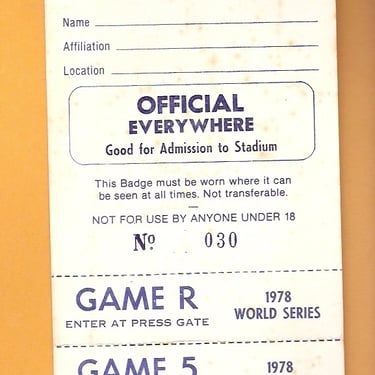
| 1978 | World Series | Los Angeles Dodgers | Won, 4-2 |
| AL Championship Series | Kansas City Royals | Won, 3-1 | |
|
|
|||
| 1977 | World Series | Los Angeles Dodgers | Won, 4-2 |
| AL Championship Series | Kansas City Royals | Won, 3-2 | |
|
|
|||
| 1976 | World Series | Cincinnati Reds | Lost, 4-0 |
| AL Championship Series | Kansas City Royals | Won, 3-2 | |
|
|
|||
| 1964 | World Series | St. Louis Cardinals | Lost, 4-3 |
|
|
|||
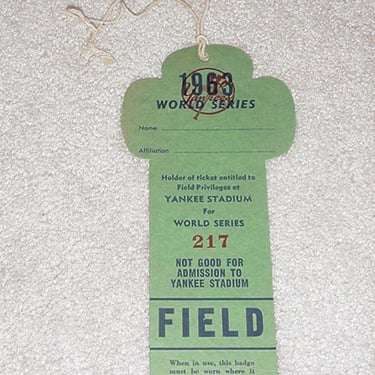
| 1963 | World Series | Los Angeles Dodgers | Lost, 0-4 |
|
|
|||
| 1962 | World Series | San Francisco Giants | Won, 4-3 |
|
|
|||
| 1961 | World Series | Cincinnati Reds | Won, 4-1 |
|
|
|||
| 1960 | World Series | Pittsburgh Pirates | Lost, 4-3 |
|
|
|||
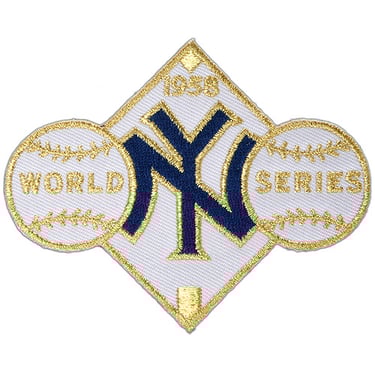
| 1958 | World Series | Milwaukee Braves | Won, 4-3 |
|
|
|||
| 1957 | World Series | Milwaukee Braves | Lost, 4-3 |
|
|
|||
| 1956 | World Series | Brooklyn Dodgers | Won, 4-3 |
|
|
|||
| 1955 | World Series | Brooklyn Dodgers | Lost, 4-3 |
|
|
|||
| 1953 | World Series | Brooklyn Dodgers | Won, 4-2 |
|
|
|||
| 1952 | World Series | Brooklyn Dodgers | Won, 4-3 |
|
|
|||
| 1951 | World Series | New York Giants | Won, 4-2 |
|
|
|||
| 1950 | World Series | Philadelphia Phillies | Won, 4-0 |
|
|
|||
| 1949 | World Series | Brooklyn Dodgers | Won, 4-1 |
|
|
|||
| 1947 | World Series | Brooklyn Dodgers | Won, 4-3 |
|
|
|||
| 1943 | World Series | St. Louis Cardinals | Won, 4-1 |
|
|
|||
| 1942 | World Series | St. Louis Cardinals | Lost, 4-1 |
|
|
|||
| 1941 | World Series | Brooklyn Dodgers | Won, 4-1 |
|
|
|||
| 1939 | World Series | Cincinnati Reds | Won, 4-0 |
|
|
|||
| 1938 | World Series | Chicago Cubs | Won, 4-0 |
|
|
|||
| 1937 | World Series | New York Giants | Won, 4-1 |
|
|
|||
| 1936 | World Series | New York Giants | Won, 4-2 |
|
|
|||
| 1932 | World Series | Chicago Cubs | Won, 4-0 |
|
|
|||
| 1928 | World Series | St. Louis Cardinals | Won, 4-0 |
|
|
|||
| 1927 | World Series | Pittsburgh Pirates | Won, 4-0 |
|
|
|||
| 1926 | World Series | St. Louis Cardinals | Lost, 4-3 |
|
|
|||
| 1923 | World Series | New York Giants | Won, 4-2 |
|
|
|||
| 1922 | World Series | New York Giants | Lost, 4-0 |
|
|
|||
| 1921 | World Series | Giants | Lost, 5-3 |
Some Yankee
History...
The
New York Yankees first played ball in 1903 and since that time over 1,200 ball
players have had the privilege of putting on the Yankee pinstripes. Since their
introduction to the game, the Yankees have dominated the sport and have won a
total of 35 Pennants and 24 World Series. It all started in 1903 when Frank
Farrell and Bill Devery purchased the Baltimore franchise for $18,000 and moved
it to New York. The team first starting playing at the famous 10,000 seat
Hilltop Park. The team was then called the Highlanders as the stadium sat on
Broadway and 168th Street in Upper Manhattan. The Highlanders first coach was
Clark Griffith, who was also a pitcher and won 14 games in 1903, who was hired
away from the Chicago Whitesox. In the first year of existence, the highlanders
finished in fourth place. The following year the great Jack Chesbro won an
incredible 41 games, but the Highlanders still finished second behind Boston.
In 1913, the team changed its name to the Yankees. With the name change also
came a move from Hilltop Park to the Polo Grounds. The Yankees were so popular
that they outgrew Hilltop Park as fans gathered and overfilled the ballpark.
Without much success and little money, Farrell and Devery sold the team to
Colonels Tillinghast L'Hommedieu Huston and Jacob Ruppert for the sum of
$460,000. At that time the new ownership wanted to change the name of team to
the "Knickerbockers" after Ruppert's beer business as a part of a promotional
plan. Major outcry from the fans and media caused Ruppert to change his mind and
keep the name "Yankees". After three more years of more unsuccessful seasons,
the Yankees decided to hire the great Miller Huggins. Huggins had an immediate
impact on the team as they started moving up in the standings. But as we all
know, they greatest player ever to play the game was about to make his impact on
the sport. The only downside was that we would have to wait until 1920.

The day after Christmas in 1919, the greatest deal in the
history of sports took place. Harry Frazee was to receive a total of $100,00 in
return for George Herman Ruth. Col. Jacob Ruppert also agreed to loan the sum of
$300,000 to Frazee to guarantee his mortgage on Fenway Park. Baseball, as we
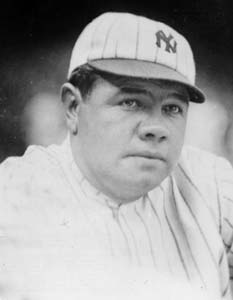
know it today, would forever be changed. The Yankees agreed to pay "The Babe"
the sum of $20,000 for the 1920 season. That season Ruth hit an amazing 54
homeruns, more than any team in baseball except the Phillies. The Yankees hit an
amazing 115 homeruns as a team. In 1920, Ruth hit .376 and had 137 RBIs, along
with a record slugging percentage of .847. Ruth helped baseball overcome the
scandal that hit baseball in 1919 called the "Black Sox Scandal" in which White
Sox players were accused of throwing the World Series against the Cincinnati
Reds. Also in 1920, the Yankees finally drew over 1 million fans to the ballpark
with a total of 1,289,422. Ruth became the greatest sports hero of all-time
surpassing the likes of Red Grange, Bobby Jones, Jack Johnson, and Jack Dempsey.
He would change the game of baseball forever and be known by most as the
greatest player ever to play the game. There is more great history to
come....Check back soon.
The
Yankee have amassed a total of 27 World Championships!
History of the Yankee Uniform
What would become the most recognizable insignia in sports—the interlocking "NY"—made its first appearance on the uniforms of the New York Highlanders in 1909. The design was actually created in 1877 by Louis B. Tiffany for a medal to be given by the New York City Police Department to Officer John McDowell, the first NYC policeman shot in the line of duty. Perhaps because one of the club’s owners, Bill Devery, was a former NYC police chief, the design was adopted by the Highlanders. It first appeared on both the cap and on the jersey’s left sleeve, replacing the separated "N" and "Y" which had appeared on the left and right breast each season since 1903 with the exception of 1905. For that season only, the "N" and "Y" were merged side by side into a monogram on the left breast—actually a forerunner of the now legendary emblem.
In 1912, their final season at Hilltop Park, the Yankees—as they were now commonly known—made a fashionable debut at their home opener on April 11. Their traditional white uniforms were now trimmed with black pinstripes, creating a look that would become the most famous uniform design in sports history. The Yankees, however, were not the first team with pinstripes and would actually abandon the look for the next two seasons. By 1915, though, the pinstripes were back for good and, with the exception of the cap, the uniform would remain relatively unchanged.
The Yankees utilized numerous cap designs—including pinstripes—from 1903 until 1922 when they finally settled on a solid navy cap with the interlocking "NY" insignia. Only one more element would now be needed to achieve a look that remains in place today. In 1917, the Yankees removed the "NY" monogram from the jersey and went with a plain, pinstripes-only look. The "NY" remained off the uniform—except for the cap—for the next 20 years until it was reinstated in 1936. The legendary Babe Ruth, therefore, actually played his entire Yankee career without ever wearing the club’s now-legendary insignia on his jersey. With the exception of minor alterations—including bolder pinstripes in the forties—the Yankee uniform has remained unchanged for more than 60 years and has, of course, grown into another of the team’s great traditions.
|
THE
ORIGINALS: |
YANKEES WERE FIRST TO MAKE UNIFORM NUMBERS PERMANENT
In 1929, the New York Yankees became the first team to make numbers a permanent
part of the uniform. Other teams quickly adopted the idea and, by 1932, uniform
numbers became standard for all teams. The initial distribution of numbers on
the Yankees was made according to the player’s position in the batting order.
Therefore, in 1929, leadoff hitter Earle Combs wore #1, Mark Koenig #2, Babe
Ruth #3, Lou Gehrig #4, Bob Meusel #5, Tony Lazzeri #6, Leo Durocher #7, Johnny
Grabowski #8, Benny Bengough #9, Bill Dickey #10 (Grabowski, Bengough and Dickey
shared the catching duties).
WHY
THE YANKEES?
When the American League moved the Baltimore Orioles to New York for the 1903
season, the club made its home at 168th Street and Broadway, one of the highest
spots in Manhattan. The team would, therefore, be known as the "Highlanders" and
their field "Hilltop Park." As early as 1905, however, the name "Yankees" began
popping up in newspapers whose editors undoubtedly were searching for a shorter
name for their headlines. By the time the franchise moved from decaying Hilltop
Park to the Polo Grounds in 1913, it officially changed its name to the by then
commonly-used "New York Yankees."
Important Dates in Yankee History
January 9, 1903
Frank Farrell and Bill Devery purchase the defunct Baltimore franchise of the
American League for $18,000 and then move the team to Manhattan.
March 12, 1903
The New York franchise is approved as a member of the American League. The team
will play in a hastily constructed, all-wood park at 168th Street and Broadway.
Because the site is one of the highest spots in Manhattan, the club will be
known as the "Highlanders" and their home field "Hilltop Park."
April 22, 1903
The Highlanders play their first game, a 3-1 loss at Washington.
April 23, 1903
The Highlanders record the first win in franchise history, a 7-2 decision at
Washington. Harry Howell recorded the win.
April 30, 1903
The Highlanders notch a 6-2 win vs. Washington in their inaugural home opener at
Hilltop Park.
April 11, 1912
Pinstripes first appear on Highlanders' uniforms, creating a look that would
become the most famous uniform design in sports.
April, 1913
The Highlanders are officially renamed the "Yankees" after moving to the Polo
Grounds, home of the National League's New York Giants.
January 11, 1915
Col. Jacob Ruppert and Col. Tillinghast L’Hommedieu Huston purchase the Yankees
for $460,000.
April 24, 1917
George Mogridge becomes the first Yankee to throw a no-hitter in a 2-1 win at
Fenway Park.
January 3, 1920
The Yankees purchase the contract of Babe Ruth from the Boston Red Sox for
$125,000 and a $350,000 loan against the mortgage on Fenway Park.
September, 1921
The Yankees clinch the first of their 35 A.L. pennants.
May
5, 1922
Construction begins on Yankee Stadium.
May
21, 1922
Col. Ruppert buys out Col. Huston for $1,500,000.
April 18, 1923
Yankee Stadium opens with a 4-1 win over the Boston Red Sox before a reported
crowd of 74,200. Babe Ruth hits the Stadium's first home run.
October 15, 1923
The Yankees defeat the New York Giants, after World Series losses to their
cross-town rivals in 1921 and 1922, for the first of 25 World Championships.
June
1, 1925
Lou Gehrig begins his record streak of 2,130 consecutive games played,
pinch-hitting for Pee Wee Wanniger.
September 30, 1927
Babe Ruth breaks his own Major-League record with his 60th home run on the
season's final day.
April 20, 1928
The Yankee's sixth season at Yankee Stadium opens with the left-field stands
enlarged to three decks.
April 16, 1929
The Yankees become the first team to make numbers a permanent part of the
uniform (numbers would become standard for all teams by 1932).
September 25, 1929
Manager Miller Huggins, who guided the Yankees to their first six A.L. pennants
and three World Championships, dies of blood poisoning.
June
3, 1932
Lou Gehrig becomes the first player to hit four home runs in a single game in
the Yankees' 20-13 win at Philadelphia. He remains the only Yankee to hit four
home runs in one game.
July
14, 1934
Babe Ruth hits the 700th home run of his career off Tommy Bridges in the second
inning of a 4-2 Yankees' win at Detroit's Navin Field.
November 21, 1934
The Yankees purchase Joe DiMaggio from the San Francisco Seals of the Pacific
Coast League for $50,000.
April 20, 1937
The Yankees' 15th season at Yankee Stadium opens with the right-field stands
enlarged to three decks. The wooden bleachers are replaced by a concrete
structure with the distance to center field dropping from 490 to 461 feet.
May
30, 1938
A franchise-record crowd of 81,841 attends a doubleheader sweep of the Boston
Red Sox.
May
2, 1939
Lou Gehrig’s playing streak of 2,130 consecutive games ends when he does not
make an appearance in a 22-2 Yankees' win at Detroit. Babe Dahlgren plays first
base for the Yankees and contributes a double and a home run.
July
4, 1939
"Lou Gehrig Appreciation Day" is held at Yankee Stadium. His uniform number (4)
is the first to be retired in Major League Baseball and Gehrig makes his famous
"Today I consider myself the luckiest man on the face of the earth" speech.
May
15, 1941
Joe DiMaggio’s 56-game hitting streak begins with a single off Edgar Smith in a
13-1 loss vs. Chicago at Yankee Stadium.
June
2, 1941
Lou Gehrig dies of Amyotrophic Lateral Sclerosis at the age of 37.
July
17, 1941
Joe DiMaggio’s consecutive-game hitting streak ends at 56 when he goes 0-for-3
in a 4-3 Yankees' win at Cleveland. Indians' third baseman Ken Keltner twice
robs DiMaggio of hits with great fielding plays. DiMaggio then hits in the next
16 straight games to give him hits in 72 of 73 games.
January 25, 1945
Dan Topping, Del Webb and Larry MacPhail purchase the Yankees for $2,800,000
from the estate of the late Col. Jacob Ruppert. MacPhail replaces Ed Barrow as
President and General Manager.
May
28, 1946
The first night game is played at Yankee Stadium and the Yankees suffer a 2-1
loss vs. Washington before 49,917 fans.
April 27, 1947
"Babe Ruth Day" is celebrated throughout Major League Baseball.
June
13, 1948
Babe Ruth’s uniform number (3) is retired at Yankee Stadium's 25th Anniversary
celebration. The Babe makes his final Stadium appearance.
August 16, 1948
Babe Ruth dies in New York of throat cancer at age 53.
October 12, 1948
The Yankees announce that Casey Stengel will replace Bucky Harris as manager.
April 17, 1951
Mickey Mantle makes his Major-League debut, going 1-for-4 in a 4-0 win vs.
Boston at Yankee Stadium.
September 28, 1951
In Game One of doubleheader vs. Boston at Yankee Stadium, Allie Reynolds tosses
his second no-hitter of the season (he had previously no-hit the Indians at
Municipal Stadium in Cleveland on July 12).
December 12, 1951
Joe DiMaggio officially announces his retirement.
April 17, 1953
Exactly two years after his Yankee debut, Mickey Mantle hits what is recognized
as the game's first "tape-measure" home run, a 565-foot clout off the Senators'
Chuck Stobbs at Washington's Griffith Stadium.
October 5, 1953
The Yankees win a record fifth consecutive World Championship.
October 8, 1956
Don Larsen hurls the only perfect game in World Series history, a 2-0 win over
Brooklyn in Game Five at Yankees Stadium.
October 1, 1961
Roger Maris hits his 61st home run in the season's final game to establish a
Major-League record.
June
24, 1962
Jack Reed’s two-run, 22nd-inning home run ends the longest game in Yankee
history, a 9-7 win at Detroit.
November 2, 1964
CBS purchases 80% of Yankees for $11,200,000. The network later buys the
remaining 20%.
June
8, 1969
"Mickey Mantle Day" is celebrated at Yankee Stadium and his uniform number (7)
is retired.
August 8, 1972
The Yankees sign a 30-year lease to play in a remodeled Yankee Stadium to be
completed in 1976.
January 3, 1973
A limited partnership, headed by George M. Steinbrenner III as its managing
general partner, purchases the Yankees from CBS.
September 30, 1973
Ralph Houk resigns as manager.
April 6, 1974
The Yankees begin the first of two seasons at Shea Stadium, playing the first
home game outside Yankee Stadium since 1922 (go 90-69 there in 1974-75).
December 31, 1974
Free agent Catfish Hunter signs a then-record five-year contract.
August 1, 1975
Billy Martin replaces Bill Virdon for his first of five stints as manager.
April 15, 1976
Remodeled Yankee Stadium opens with an 11-4 win over Minnesota Twins. The Twins'
Dan Ford hits the first home run.
October 14, 1976
Chris Chambliss’ ninth-inning home run off Mark Littell in Game Five of the ALCS
vs. Kansas City gives the Yankees their 30th pennant.
November 29, 1976
Free agent Reggie Jackson signs a five-year contract.
October 18, 1977
Reggie Jackson hits three home runs in Game Six of the World Series vs. the Los
Angeles Dodgers at Yankee Stadium.
June
16, 1978
Ron Guidry establishes a franchise record by striking out 18 batters in the
Yankees' 4-0 win vs. California at Yankee Stadium.
July
24, 1978
Billy Martin resigns as manager.
July
25, 1978
Bob Lemon is named manager, replacing Billy Martin.
July
29, 1978
On Old Timer's Day, the Yankees announce that Billy Martin will return as Yankee
manager in 1980 and Bob Lemon will become general manager.
October 2, 1978
The Yankees, 14 games behind Boston at one point, defeat the Red Sox, 5-4, at
Fenway Park in only the second playoff game in AL history.
June
18, 1979
Billy Martin returns as Yankee manager, replacing Bob Lemon.
August 2, 1979
Yankees Captain Thurman Munson dies in a plane crash in Canton, Ohio, at age 32
(his number "15" is immediately retired).
December 15, 1980
Free agent Dave Winfield signs a then-record 10-year contract.
September 6, 1981
Bob Lemon is named manager for second time, replacing Gene Michael.
April 26, 1982
Gene Michael becomes manager for second time, replacing Bob Lemon.
August 3, 1982
Clyde King is named Yankee manager, replacing Gene Michael.
July
4, 1983
Dave Righetti pitches only the sixth regular-season no-hitter in franchise
history and the first since 1951, a 4-0 win vs. the Red Sox at Yankee Stadium.
July
24, 1983
The Yankees and Kansas City play the infamous "Pine Tar" game at Yankee Stadium
as George Brett hits a two-out, ninth-inning home run off Goose Gossage to give
the Royals an apparent 5-4 lead. The umpires nullify the homer because the pine
tar on Brett's bat is above the allowable 18 inches and Brett is called out for
using an illegal bat. The Yankees win 4-3 (see August 18, 1983). August 18, 1983
Kansas City's protest is upheld and the "Pine Tar" game concludes with the
Royals winning 5-4. When play is resumed, Yankee pitcher Ron Guidry is in center
field for the final out of the top of the ninth while left-handed first baseman
Don Mattingly is at second. Royals' reliever Dan Quisenberry retires the Yankees
in order in the bottom of the ninth.
April 28, 1985
Billy Martin is named manager for fourth time, replacing Yogi Berra.
October 17, 1985
Lou Piniella is named manager, replacing Billy Martin.
December 14, 1985
Roger Maris dies at age 51 in Houston, Texas.
July
18, 1987
Don Mattingly homers off Texas’ Jose Guzman to tie Dale Long’s Major-League
record of hitting a home run in eight consecutive games (Mattingly hits 10 home
runs during the streak).
September 29, 1987
Don Mattingly hits a grand slam off Boston’s Bruce Hurst, setting a Major-League
record with six grand slams in a season.
June
23, 1988
Billy Martin is replaced as manager of the Yankees for the fifth and final time.
Lou Piniella is named manager for the second time.
December 9, 1988
The Yankees sign a 12-year television contract with Madison Square Garden
Network.
August 18, 1989
Bucky Dent replaces Dallas Green as Yankee manager.
December 25, 1989
Billy Martin dies in an automobile accident at age 61.
June
6, 1990
Stump Merrill replaces Bucky Dent as Yankee manager.
August 14, 1993
"Reggie Jackson Day," his uniform number (44) retired.
September 4, 1993
Jim Abbott pitches a 4-0, no-hit win over the Indians at Yankee Stadium.
May 30, 1995
Derek Jeter records his first career hit. He gets the hit against the
Seattle Mariners in "The Kingdome" in front of only 10,079 fans.
August 13, 1995
Mickey Mantle dies of cancer at age 63 in Dallas, Texas.
September 6, 1995
Lou Gehrig's Major League record of 2,130 consecutive games played is broken
when Baltimore's Cal Ripken, Jr. plays in his 2,131st.
May
14, 1996
Dwight Gooden hurls only the eighth regular-season no-hitter in Yankee history,
a 2-0 blanking of the Seattle Mariners at Yankee Stadium.
June
16, 1996
Mel Allen, the legendary "Voice of the Yankees" from 1939-64, dies at age 83 in
Greenwich, Connecticut.
August 25, 1996
A monument in honor of Mickey Mantle is unveiled in Yankee Stadium's Monument
Park.
January 22, 1997
Don Mattingly officially announces his retirement at a media conference at
Yankee Stadium.
May
17, 1998
David Wells tosses only the 14th regular-season perfect game in baseball
history, the first ever by a Yankee.
September 25, 1998
The Yankees establish an American-League record with their 112th win of the
season (a 6-1 win vs. Tampa Bay at Yankee Stadium), breaking the mark of 111 by
the 1954 Cleveland Indians (they complete the season with an AL record 114th
victory on September 27 vs. Tampa Bay).
October 21, 1998
The Yankees complete an incredible season with a four-game sweep of the San
Diego Padres in the World Series to capture the franchise's 24th World
Championship. Their 3-0 win gives the club a record of 125-50 (114-48 in the
regular season, 11-2 in postseason).
March 8, 1999
Joe DiMaggio dies at age 84 in Hollywood, Florida.
April 25, 1999
A monument in honor of Joe DiMaggio is unveiled in Yankee Stadium's Monument
Park.
July
18, 1999
On "Yogi Berra Day," David Cone tosses only the 15th regular-season perfect game
in baseball history one season after David Wells accomplishes the feat.
Ironically, Don Larsen--who tossed a perfect game in the 1956 World
Series--throws out the ceremonial first pitch.
September 9 1999
Jim "Catfish" Hunter dies at age 53 in Hertford, North Carolina.
October 27, 1999
The Yankees play Baseball's last game of the century and complete a four-game
sweep of the Atlanta Braves to capture their 25th World Championship. The 4-1
win is also the club's 12th straight in World-Series play, tying the record of
the 1927, 1928 and 1932 Yankees.
September 21,
2008
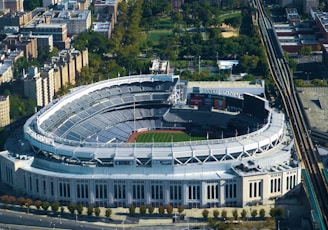
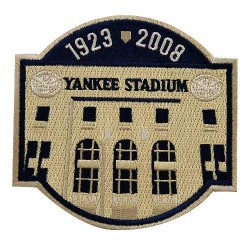
The Yankees play their last home game at old Yankee Stadium.
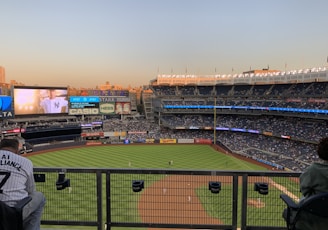
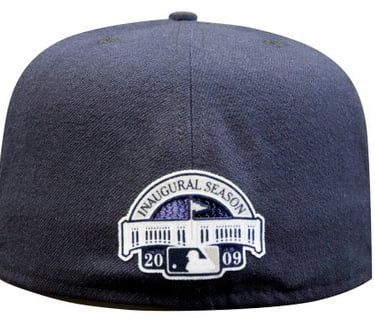
April 16, 2009
The Yankees play their first game at New Yankee Stadium. C.C. Sabathia
makes his Yankee debut in the loss to the Indians.
September 11, 2009
Derek Jeter becomes the All-Time Yankees hit leader with #2,722 off Orioles
pitcher Chris Tillman.
November 4, 2009
The Yankees win their 27th World Series Title defeating the Philadelphia
Phillies, four games to two at Yankee Stadium.
March 31, 2010
Historic Gate 2 at Old Yankee Stadium comes down, compliments of New York City
and Turner Construction. The effort to preserve Gate 2 was lost.
August 9, 2011
Derek Jeter records his 3,000th hit for the Yankees. He connects off Rays
pitcher David Price for a homerun and #3000!
Information and Stats on Current and Former Yankee Greats !
Most Valuable Players
|
YEAR |
PLAYER |
AGE |
POS |
G |
AB |
R |
H |
2B |
3B |
HR |
RBI |
BA |
|
|
|
|
||||||||||||||
|
1923 |
Babe Ruth |
28 |
OF-1B |
152 |
522 |
151 |
205 |
45 |
13 |
41 |
130 |
.393 |
11 |
|
|
1927 |
Lou Gehrig |
24 |
1B |
155 |
584 |
149 |
218 |
52 |
18 |
47 |
175 |
.373 |
15 |
|
|
1936 |
Lou Gehrig |
33 |
1B |
155 |
579 |
167 |
205 |
37 |
7 |
49 |
152 |
.354 |
9 |
|
|
1939 |
Joe DiMaggio |
25 |
OF |
120 |
462 |
108 |
176 |
32 |
6 |
30 |
126 |
.381 |
5 |
|
|
1941 |
Joe DiMaggio |
27 |
OF |
139 |
541 |
122 |
193 |
43 |
11 |
30 |
125 |
.357 |
9 |
|
|
1942 |
Joe Gordon |
27 |
2B |
147 |
538 |
88 |
173 |
29 |
4 |
18 |
103 |
.322 |
28 |
|
|
YEAR |
PITCHER |
AGE |
POS |
G |
IP |
W |
L |
PCT |
H |
R |
ER |
SO |
BB |
ERA |
|
|
||||||||||||||
|
1943 |
Spud Chandler |
36 |
RHP |
30 |
253 |
20 |
4 |
.833 |
197 |
62 |
46 |
134 |
54 |
1.64 |
|
YEAR |
PLAYER |
AGE |
POS |
G |
AB |
R |
H |
2B |
3B |
HR |
RBI |
BA |
E |
|
|
|||||||||||||
|
1947 |
Joe DiMaggio |
33 |
OF |
141 |
534 |
97 |
168 |
31 |
10 |
20 |
97 |
.315 |
1 |
|
1950 |
Phil Rizzuto |
32 |
SS |
155 |
617 |
125 |
200 |
36 |
7 |
7 |
66 |
.324 |
14 |
|
1951 |
Yogi Berra |
26 |
C |
141 |
547 |
92 |
161 |
19 |
4 |
27 |
88 |
.294 |
13 |
|
1954 |
Yogi Berra |
29 |
C |
151 |
584 |
88 |
179 |
28 |
6 |
22 |
125 |
.307 |
8 |
|
1955 |
Yogi Berra |
30 |
C |
147 |
541 |
84 |
147 |
20 |
3 |
27 |
108 |
.272 |
13 |
|
1956 |
Mickey Mantle |
24 |
OF |
150 |
533 |
132 |
188 |
22 |
5 |
52 |
130 |
.353 |
4 |
|
1957 |
Mickey Mantle |
26 |
OF |
144 |
474 |
121 |
173 |
28 |
6 |
34 |
94 |
.365 |
7 |
|
1960 |
Roger Maris |
26 |
OF |
136 |
499 |
98 |
141 |
18 |
7 |
39 |
112 |
.283 |
4 |
|
1961 |
Roger Maris |
27 |
OF |
161 |
590 |
132 |
159 |
16 |
4 |
61 |
142 |
.269 |
9 |
|
1962 |
Mickey Mantle |
31 |
OF |
123 |
377 |
96 |
121 |
15 |
1 |
30 |
89 |
.321 |
5 |
|
1963 |
Elston Howard |
34 |
C |
135 |
487 |
75 |
140 |
21 |
6 |
28 |
85 |
.287 |
5 |
|
1976 |
T. Munson |
29 |
C |
152 |
616 |
79 |
186 |
27 |
1 |
17 |
105 |
.302 |
14 |
|
1985 |
Don Mattingly |
24 |
1B |
159 |
652 |
107 |
211 |
48 |
3 |
35 |
145 |
.324 |
7 |
| 2005 | Alex Rodriguez | 30 | 3B | 162 | 605 | 124 | 194 | 29 | 1 | 48 | 130 | .321 | 12 |
Bold denotes league leader
Yankee Batting Title Champions
|
|
||||||||||
|
YEAR |
YANKEE |
AVG |
G |
AB |
R |
H |
2B |
3B |
HR |
RBI |
|
1924 |
Babe Ruth |
.378 |
153 |
529 |
143 |
200 |
39 |
7 |
46 |
121 |
|
1934 |
Lou Gehrig |
.363 |
154 |
579 |
128 |
210 |
40 |
6 |
49 |
165 |
|
1939 |
Joe DiMaggio |
.381 |
120 |
462 |
108 |
176 |
32 |
6 |
30 |
126 |
|
1940 |
Joe DiMaggio |
.352 |
132 |
508 |
93 |
179 |
28 |
9 |
31 |
133 |
|
1945 |
George Stirnweiss |
.309 |
152 |
632 |
107 |
195 |
32 |
22 |
10 |
64 |
|
1956 |
Mickey Mantle |
.353 |
150 |
533 |
132 |
188 |
22 |
5 |
52 |
130 |
|
1984 |
Don Mattingly |
.343 |
153 |
603 |
91 |
207 |
44 |
2 |
23 |
110 |
|
1994 |
PAUL O'NEILL |
.359 |
103 |
368 |
68 |
132 |
25 |
1 |
21 |
83 |
|
1998 |
BERNIE WILLIAMS |
.339 |
128 |
499 |
101 |
169 |
30 |
5 |
26 |
97 |
|
|
Bold denotes league leader
Yankee Captains
Hal
Chase, 1912
Roger Peckinpaugh, 1914-1921
Babe Ruth, 5/20/22-5/25/22
Everett Scott, 1922-1925
Lou
Gehrig, 4/21/35-6/2/41
Thurman Munson, 4/17/76-8/2/79
Graig Nettles, 1/29/82-3/30/84
Willie Randolph, 3/4/86-10/2/89
Ron
Guidry, 3/4/86-7/12/89
Don
Mattingly, 2/28/91-1995
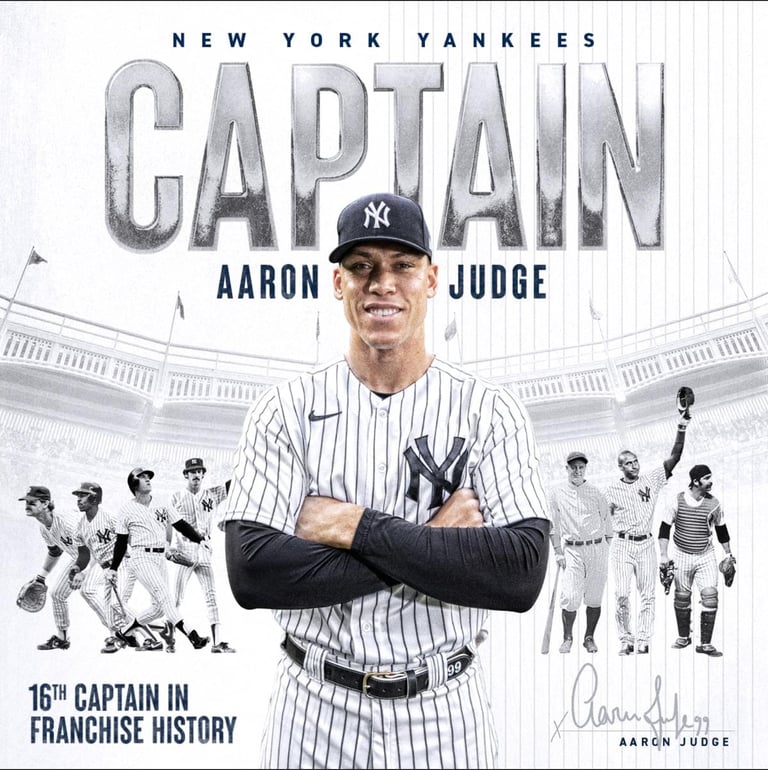
Derek Jeter, 6/3/2003-present
20-Game Winners
|
YEAR |
PITCHER |
W |
L |
|
|
|||
|
1903 |
Jack Chesbro |
21 |
15 |
|
|
|||
|
1904 |
Jack Chesbro |
41 |
12 |
|
|
|||
|
|
Jack Powell |
23 |
19 |
|
|
|||
|
1906 |
Albert Orth |
27 |
17 |
|
|
|||
|
|
Jack Chesbro |
24 |
16 |
|
|
|||
|
1910 |
Russell Ford |
26 |
6 |
|
|
|||
|
1911 |
Russell Ford |
22 |
11 |
|
|
|||
|
1916 |
Bob Shawkey |
24 |
14 |
|
|
|||
|
1919 |
Bob Shawkey |
20 |
11 |
|
|
|||
|
1920 |
Carl Mays |
26 |
11 |
|
|
|||
|
|
Bob Shawkey |
20 |
13 |
|
|
|||
|
1921 |
Carl Mays |
27 |
9 |
|
|
|||
|
1922 |
Joe Bush |
26 |
7 |
|
|
|||
|
|
Bob Shawkey |
20 |
12 |
|
|
|||
|
1923 |
Sad Sam Jones |
21 |
8 |
|
|
|||
|
1924 |
Herb Pennock |
21 |
9 |
|
|
|||
|
1926 |
Herb Pennock |
23 |
11 |
|
|
|||
|
1927 |
Waite Hoyt |
22 |
7 |
|
|
|||
|
1928 |
George Pipgras |
24 |
13 |
|
|
|||
|
|
Waite Hoyt |
23 |
7 |
|
|
|||
|
1931 |
Lefty Gomez |
21 |
9 |
|
|
|||
|
1932 |
Lefty Gomez |
24 |
7 |
|
|
|||
|
1934 |
Lefty Gomez |
26 |
5 |
|
|
|||
|
1936 |
Red Ruffing |
20 |
12 |
|
|
|||
|
1937 |
Lefty Gomez |
21 |
11 |
|
|
|||
|
|
Red Ruffing |
20 |
7 |
|
|
|||
|
1938 |
Red Ruffing |
21 |
7 |
|
|
|||
|
1939 |
Red Ruffing |
21 |
7 |
|
|
|||
|
1942 |
Ernie Bonham |
21 |
5 |
|
|
|||
|
1943 |
Spud Chandler |
20 |
4 |
|
|
|||
|
1946 |
Spud Chandler |
20 |
8 |
|
|
|||
|
1949 |
Vic Raschi |
21 |
10 |
|
|
|||
|
1950 |
Vic Raschi |
21 |
8 |
|
|
|||
|
1951 |
Eddie Lopat |
21 |
9 |
|
|
|||
|
|
Vic Raschi |
21 |
10 |
|
|
|||
|
1952 |
Allie Reynolds |
20 |
8 |
|
|
|||
|
1954 |
Bob Grim |
20 |
6 |
|
|
|||
|
1958 |
Bob Turley |
21 |
7 |
|
|
|||
|
1961 |
Whitey Ford |
25 |
4 |
|
|
|||
|
1962 |
Ralph Terry |
23 |
12 |
|
|
|||
|
1963 |
Whitey Ford |
24 |
7 |
|
|
|||
|
|
Jim Bouton |
21 |
7 |
|
|
|||
|
1965 |
Mel Stottlemyre |
20 |
9 |
|
|
|||
|
1968 |
Mel Stottlemyre |
21 |
12 |
|
|
|||
|
1969 |
Mel Stottlemyre |
20 |
14 |
|
|
|||
|
1970 |
Fritz Peterson |
20 |
11 |
|
|
|||
|
1975 |
Catfish Hunter |
23 |
14 |
|
|
|||
|
1978 |
Ron Guidry |
25 |
3 |
|
|
|||
|
|
Ed Figueroa |
20 |
9 |
|
|
|||
|
1979 |
Tommy John |
21 |
9 |
|
|
|||
|
1980 |
Tommy John |
22 |
9 |
|
|
|||
|
1983 |
Ron Guidry |
21 |
9 |
|
|
|||
|
1985 |
Ron Guidry |
22 |
6 |
|
|
|||
|
1996 |
Andy Pettitte |
21 |
8 |
|
|
|||
| 1998 | Davis Cone | 20 | 7 |
| 2001 | Roger Clemens | 20 | 7 |
|
2003 |
Andy Pettitte |
21 |
8 |
| 2008 | Mike Mussina | 20 | 9 |
| 2010 | CC Sabathia | 21 | 7 |
|
|
Regular Season (10) YEAR PITCHER SCORE
1917 George Mogridge, at Boston, April 24 2-1*
1923 Sad Sam Jones, at Philadelphia, September 4 2-0
1938 Monte Pearson, vs. Cleveland, August 27 (2nd game) 13-0
1951 Allie Reynolds, at Cleveland, July 12 (night) 1-0
Allie Reynolds, vs. Boston, September 28 (1st game) 8-0
1983 Dave Righetti, vs. Boston, July 4 4-0*
1993 Jim Abbott, vs. Cleveland, September 4 4-0*
1996 Dwight Gooden, vs. Seattle, May 14 2-0
1998 David Wells, vs. Minnesota, May 17 4-0*+
1999 David Cone, vs. Montreal, July 18 6-0+
Post Season (1) YEAR PITCHER SCORE
1956 Don Larsen, vs. Brooklyn, October 8 (Game Five of 2-0+
the World Series; remains the only perfect game in
Series history)
NO-HITTERS VS. YANKEES (6) YEAR PITCHER SCORE
1908 Cy Young, for Boston at New York, June 30 8-0
1916 Rube Foster, for Boston at Boston, June 21 2-0
1919 Ray Caldwell, for Cleveland at New York, 3-0
September 10 (first game)
1946 Bob Feller, for Cleveland at New York, April 30 1-0
1952 Virgil Trucks, for Detroit at New York, August 25 1-0
1958 Hoyt Wilhelm, for Baltimore, September 20 1-0
2003 6 Different Pitchers, at NY for Astros June 11 8-0
* Left-handed pitcher + Perfect Game
About One-Hitters Yankee pitchers have thrown 56 one-hitters, the most recent coming on 9/26/97 at Detroit, when four pitchers--Andy Pettitte, Brian Boehringer, Mariano Rivera and Jeff Nelson--combined to limit the Tigers to a third-inning single by Travis Fryman...the last 2 complete-game one-hitters were tossed by Jimmy Key on 4/27/93 at California in a 5-0 Yankee win and by Mike Mussina on September 2, 2001 against the Redsox. Mussina had 13 Ks that day against Boston. Bob Turley and Whitey Ford each hurled three CG one-hitters for New York and both men participated in a fourth...Bob Shawkey, Rip Collins, Lefty Gomez, Vic Raschi and Floyd Bevens each threw two, with one of Bevens' coming in Game Four of the 1947 World Series...Bevens was one out from a no-hitter when the Dodgers' Cookie Lavagetto doubled in two runs to give Brooklyn a 3-2 victory...it was the last game Bevens and Lavagetto ever played in the Majors. The Yankees have been held to one hit 50 times, the last on 9/10/99 by Boston's Pedro Martinez in a 3-1 Red Sox' win at Yankee Stadium...Chili Davis' solo HR in the second inning was the Yankee's only hit...it was only the third one-hitter vs. the Yankees in the decade of the 90s (also Oakland's Steve Ontiveros on 5/27/95 at Oakland and Greg Harris/Jeff Reardon on 6/7/90 at Boston)...Joe Wood, Earl Hamilton and Nolan Ryan are the only three men with a pair of one-hitters against the Yankees, with both of Hamilton's coming in 1913...Hoyt Wilhelm, who no-hit the Yankees in 1958, tossed a one-hitter against them in 1959. Horace Clarke and Don Mattingly are the only Yankees to twice serve as no-hit spoilers...Clarke had the only hit in no-hit bids by Jim Palmer and Joe Niekro...in a single month in 1970, Clarke broke up three no-hitters in the 9th inning, two of which wound up being more than one-hitters...on 5/2/84 at Chicago, Mattingly ruined a perfect game for LaMarr Hoyt with a wind-blown single in the seventh inning, and on 6/29/85 vs. Milwaukee, he also broke up a no-hit bid by Moose Haas, again with a seventh-inning single...on 9/12/81 at Yankee Stadium, Boston LHP Bob Ojeda took a no-hitter into the ninth inning only to have Rick Cerone lead off with a double, followed by a Dave Winfield double. |
Yankees in the Hall of Fame
According to the National Baseball Hall of Fame, the New York Yankees have better representation than any other club, with 23 members (the New York Giants have placed the most players in the Hall with 20)....for the purpose of their comparison, games played was the determining factor for position players who suited up for more than one club....for pitchers, games won was the yardstick used....based on the Hall of Fame's criteria, therefore, both Reggie Jackson and "Catfish" Hunter are not counted among the Yankees' 23 representatives as Jackson played more games for Oakland and Hunter won more games with the A's....both players, however, played five distinguished seasons for the Yankees....the former Yankee players, managers and executives in the Hall of Fame are (year of election in parenthesis):
Ed Barrow (1953) Waite Hoyt (1969) Joe McCarthy (1957) Yogi Berra (1972) Catfish Hunter (1987) Herb Pennock (1948) Jack Chesbro (1946) Miller Huggins (1964) Phil Rizzuto (1994) Earle Combs (1970) Reggie Jackson (1993) Red Ruffing (1967) Bill Dickey (1954) Willie Keeler (1939) Babe Ruth (1936) Joe DiMaggio (1955) Tony Lazzeri (1991) Casey Stengel (1966) Whitey Ford (1974) Larry MacPhail (1978) George Weiss (1970) Lou Gehrig (1939) Lee MacPhail (1998) Lefty Gomez (1972) Mickey Mantle (1974)
Other members of the Baseball Hall of Fame who also played for or managed for the Yankees are: Frank "Home Run" Baker" (1955), Frank Chance (1946), Stan Coveleskie (1969), Clark Griffith (1945), Burleigh Grimes (1964), Bucky Harris (1975), Bill McKechnie (1962), Johnny Mize (1981), Phil Niekro (1996), Gaylord Perry (1991), Branch Rickey (1967), Joe Sewell (1977), Enos Slaughter (1985), Dazzy Vance (1955), Paul Waner (1952) and Dave Winfield (2000).
|
New York Yankees Managers & Finishes |
|||||||
| Year | Uniform # | Manager(s) | Wins | Losses | WP | Position | GB |
| 1913 |
n/a |
Frank Chance |
57 | 94 | .377 | 7th | 38 |
| 1914 |
n/a |
60 | 74 | .448 | 6th | 30 | |
|
n/a |
Roger Peckinpaugh |
10 | 10 | .500 | |||
| 1915 |
n/a |
Bill Donovan |
69 | 83 | .454 | 5th | 32½ |
| 1916 |
n/a |
80 | 74 | .519 | 4th | 11 | |
| 1917 |
n/a |
71 | 82 | .464 | 6th | 28½ | |
| 1918 |
n/a |
Miller Huggins |
60 | 63 | .488 | 4th | 13½ |
| 1919 |
n/a |
80 | 59 | .576 | 3rd | 7½ | |
| 1920 |
n/a |
95 | 59 | .617 | 3rd | 3 | |
| 1921 |
n/a |
98 | 55 | .641 | 1st | +4½ | |
| 1922 |
n/a |
94 | 60 | .610 | 1st | +1 | |
| 1923 |
n/a |
98 | 54 | .645 | 1st | +16 | |
| 1924 |
n/a |
89 | 63 | .586 | 2nd | 2 | |
| 1925 |
n/a |
69 | 85 | .448 | 7th | 30 | |
| 1926 |
n/a |
91 | 63 | .591 | 1st | +3 | |
| 1927 |
n/a |
110 | 44 | .714 | 1st | +19 | |
| 1928 |
n/a |
101 | 53 | .656 | 1st | +2½ | |
| 1929 |
n/a |
82 | 61 | .573 | 2nd | 18 | |
|
34 |
Art Fletcher |
6 | 5 | .545 | |||
| 1930 |
n/a |
Bob Shawkey |
86 | 68 | .558 | 3rd | 16 |
| 1931 |
n/a |
Joe McCarthy |
94 | 59 | .614 | 2nd | 13½ |
| 1932 |
n/a |
107 | 47 | .695 | 1st | +13 | |
| 1933 |
n/a |
91 | 59 | .607 | 2nd | 7 | |
| 1934 |
n/a |
94 | 60 | .610 | 2nd | 7 | |
| 1935 |
n/a |
89 | 60 | .597 | 2nd | 3 | |
| 1936 |
n/a |
102 | 51 | .667 | 1st | +19½ | |
| 1937 |
n/a |
102 | 52 | .662 | 1st | +13 | |
| 1938 |
n/a |
99 | 53 | .651 | 1st | +9½ | |
| 1939 |
n/a |
106 | 45 | .702 | 1st | +17 | |
| 1940 |
n/a |
88 | 66 | .571 | 3rd | 2 | |
| 1941 |
n/a |
101 | 53 | .656 | 1st | +17 | |
| 1942 |
n/a |
103 | 51 | .669 | 1st | +9 | |
| 1943 |
n/a |
98 | 56 | .636 | 1st | +13½ | |
| 1944 |
n/a |
83 | 71 | .539 | 3rd | 6 | |
| 1945 |
n/a |
81 | 71 | .533 | 4th | 6½ | |
| 1946 |
n/a |
22 | 13 | .629 | 3rd | 17 | |
|
8 |
Bill Dickey |
57 | 48 | .543 | |||
|
32 |
Johnny Neun |
8 | 6 | .571 | |||
| 1947 |
37 |
Bucky Harris |
97 | 57 | .630 | 1st | +12 |
| 1948 |
37 |
94 | 60 | .610 | 3rd | 2½ | |
| 1949 |
37 |
Casey Stengel |
97 | 57 | .630 | 1st | +1 |
| 1950 |
37 |
98 | 56 | .636 | 1st | +3 | |
| 1951 |
37 |
98 | 56 | .636 | 1st | +5 | |
| 1952 |
37 |
95 | 59 | .617 | 1st | +2 | |
| 1953 |
37 |
99 | 52 | .656 | 1st | +8½ | |
| 1954 |
37 |
103 | 51 | .669 | 2nd | 8 | |
| 1955 |
37 |
96 | 58 | .623 | 1st | +3 | |
| 1956 |
37 |
97 | 57 | .630 | 1st | +9 | |
| 1957 |
37 |
98 | 56 | .636 | 1st | +8 | |
| 1958 |
37 |
92 | 62 | .597 | 1st | +10 | |
| 1959 |
37 |
79 | 75 | .513 | 3rd | 15 | |
| 1960 |
37 |
97 | 57 | .630 | 1st | +8 | |
| 1961 |
51, 35 |
Ralph Houk |
109 | 53 | .673 | 1st | +8 |
| 1962 |
35 |
96 | 66 | .593 | 1st | +5 | |
| 1963 |
35 |
104 | 57 | .646 | 1st | +10½ | |
| 1964 |
8 |
Yogi Berra |
99 | 63 | .611 | 1st | +1 |
| 1965 |
21 |
Johnny Keane |
77 | 85 | .475 | 6th | 25 |
| 1966 |
21 |
4 | 16 | .200 | 10th | 26½ | |
|
35 |
Ralph Houk |
66 | 73 | .475 | |||
| 1967 |
35 |
72 | 90 | .444 | 9th | 20 | |
| 1968 |
35 |
83 | 79 | .512 | 5th | 20 | |
| 1969 |
35 |
80 | 81 | .497 | 5th | 28½ | |
| 1970 |
35 |
93 | 69 | .574 | 2nd | 15 | |
| 1971 |
35 |
82 | 80 | .506 | 4th | 21 | |
| 1972 |
35 |
79 | 76 | .510 | 4th | 6½ | |
| 1973 |
35 |
80 | 82 | .494 | 4th | 17 | |
| 1974 |
21 |
Bill Virdon |
89 | 73 | .549 | 2nd | 2 |
| 1975 |
21 |
53 | 51 | .510 | 3rd | 12 | |
|
1 |
Billy Martin |
30 | 26 | .536 | |||
| 1976 |
1 |
97 | 62 | .610 | 1st | +10½ | |
| 1977 |
1 |
100 | 62 | .617 | 1st | +2½ | |
| 1978 |
1 |
52 | 42 | .553 | 1st | +1 | |
|
34 |
Dick Howser |
0 |
1 |
.000 | |||
|
21 |
Bob Lemon |
48 | 20 | .706 | |||
| 1979 |
21 |
34 | 31 | .523 | 4th | 13½ | |
|
1 |
Billy Martin |
55 | 40 | .579 | |||
| 1980 |
34 |
Dick Howser |
103 | 59 | .636 | 1st | +3 |
| 1981 |
11 |
Gene Michael |
48 | 34 | .585 | 1st / 6th | 2 |
|
21 |
Bob Lemon |
11 | 14 | .440 | |||
| 1982 |
21 |
6 | 8 | .429 | 5th | 16 | |
|
11 |
Gene Michael |
44 | 42 | .512 | |||
|
42 |
Clyde King |
29 | 33 | .468 | |||
| 1983 |
1 |
Billy Martin |
91 | 71 | .562 | 3rd | 7 |
| 1984 |
8 |
Yogi Berra |
87 | 75 | .537 | 3rd | 17 |
| 1985 |
8 |
6 | 10 | .375 | 2nd | 2 | |
|
1 |
Billy Martin |
91 | 54 | .628 | |||
| 1986 |
14 |
Lou Piniella |
90 | 72 | .556 | 2nd | 5½ |
| 1987 |
14 |
89 | 73 | .549 | 4th | 9 | |
| 1988 |
14 |
45 | 48 | .484 | 5th | 3½ | |
|
1 |
Billy Martin |
40 | 28 | .588 | |||
| 1989 |
46 |
Dallas Green |
56 | 65 | .463 | 5th | 14½ |
|
30 |
Bucky Dent |
18 | 22 | .450 | |||
| 1990 |
20 |
18 | 31 | .367 | 7th | 21 | |
|
46 |
Stump Merrill |
49 | 64 | .434 | |||
| 1991 |
22 |
71 | 91 | .438 | 5th | 20 | |
| 1992 |
11 |
Buck Showalter |
76 | 86 | .469 | 4th | 20 |
| 1993 |
11 |
88 | 74 | .543 | 2nd | 7 | |
| 1994 |
11 |
70 | 43 | .619 | 1st | +6½ | |
| 1995 |
11 |
79 | 65 | .549 | 2nd | 7 | |
| 1996 |
6 |
Joe Torre |
92 | 70 | .568 | 1st | +4 |
| 1997 |
6 |
96 | 66 | .593 | 2nd | 2 | |
| 1998 |
6 |
114 | 48 | .704 | 1st | +22 | |
| 1999 |
6 |
98 | 64 | .605 | 1st | +4 | |
| 2000 |
6 |
87 | 74 | .540 | 1st | +2½ | |
| 2001 |
6 |
95 | 65 | .594 | 1st | +13½ | |
| 2002 |
6 |
103 |
58 |
.640 |
1st | +10½ | |
| 2003 | 6 | 101 | 61 | .623 | 1st | +6 | |
| 2004 | 6 | 101 | 61 | .623 | 1st | +3 | |
| 2005 | 6 | 95 | 67 | .586 | 1st | 0 | |
| 2006 |
6 |
97 |
65 |
.599 |
1st | +10 | |
| 2007 | 6 | 94 | 68 | .580 | 2nd | -2 | |
| 2008 |
|
Joe Girardi |
89 | 73 | .549 | 3rd | -8 |
| 2009 | 27 | Joe Girardi | 103 | 59 | .636 | 1st | +8 |
| 2010 | 28 | Joe Girardi | 95 | 67 | .586 | 2nd | 1 |
| 2011 | 28 | Joe Girardi | 97 | 65 | .599 | 1st | 6 |
| 2012 | 28 | Joe Girardi | - | - | - | - | - |
|
|
||
| Name | Years managed | Record |
|
|
||
| Joe Girardi | 2008-present | TBD |
| Joe Torre | 1996-2007 | 1173-767 |
|
|
||
| Buck Showalter | 1992-95 | 313-268 |
|
|
||
| Stump Merrill | 1990-91 | 120-155 |
|
|
||
| Bucky Dent | 1989-90 | 36-53 |
|
|
||
| Dallas Green | 1989 | 56-65 |
|
|
||
| Lou Piniella | 1986-87, 1988 | 224-193 |
|
|
||
| Clyde King | 1982 | 29-33 |
|
|
||
| Gene Michael | 1981, 1982 | 92-76 |
|
|
||
| Dick Howser | 1980 | 103-60 |
|
|
||
| Bob Lemon | 1978-79, 1981-82 | 99-73 |
|
|
||
| Billy Martin | 1975-78, 1979, 1983, 1985, 1988 | 556-385 |
|
|
||
| Bill Virdon | 1974-75 | 142-124 |
|
|
||
| Johnny Keane | 1965-66 | 81-101 |
|
|
||
| Yogi Berra | 1964, 1984-85 | 192-148 |
|
|
||
| Ralph Houk | 1961-63, 1966-73 | 944-806 |
|
|
||
| Casey Stengel | 1949-60 | 1149-696 |
|
|
||
| Bucky Harris | 1947-48 | 191-117 |
|
|
||
| Johnny Neun | 1946 | 8-6 |
|
|
||
| Bill Dickey | 1946 | 57-48 |
|
|
||
| Joe McCarthy | 1931-46 | 1460-867 |
|
|
||
| Bob Shawkey | 1930 | 86-68 |
|
|
||
| Art Fletcher | 1929 | 6-5 |
|
|
||
| Miller Huggins | 1918-29 | 1067-719 |
|
|
||
| Bill Donovan | 1915-17 | 220-239 |
|
|
||
| Roger Peckinpaugh | 1914 | 10-10 |
|
|
||
| Frank Chance | 1913-14 | 117-168 |
|
|
||
| Harry Wolverton | 1912 | 50-102 |
|
|
||
| Hal Chase | 1910-11 | 85-78 |
|
|
||
| George Stallings | 1909-10 | 153-138 |
|
|
||
| Norm Elberfeld | 1908 | 27-71 |
|
|
||
| Clark Griffith | 1903-08 | 419-370 |
|
|
|
| Name | Years served |
|
|
|
| Joe Altobelli | 1981-82, 1986 |
|
|
|
| Loren Babe | 1967 |
|
|
|
| Yogi Berra | 1963, 1976-83 |
|
|
|
| Clete Boyer | 1988, 1992-94 |
|
|
|
| Cloyd Boyer | 1975, 1977 |
|
|
|
| Jimmy Burke | 1931-32 |
|
|
|
| Brian Butterfield | 1994 |
|
|
|
| Jose Cardenal | 1996-99 |
|
|
|
| Chris Chambliss | 1988, 1996-00 |
|
|
|
| Tony Cloninger | 1992-01 |
|
|
|
| Earle Combs | 1935-44 |
|
|
|
| Mark Connor | 1984-85, 1986-87, 1990-93 |
|
|
|
| Billy Connors | 1989-90, 1994-95, 2000 |
|
|
|
| Nardi Contraris | 1995 |
|
|
|
| Pat Corrales | 1989 |
|
|
|
| John Corriden | 1947-48 |
|
|
|
| Bobby Cox | 1977 |
|
|
|
| Frank Crosetti | 1946-68 |
|
|
|
| Cot Deal | 1965 |
|
|
|
| Gary Denbo | 2001 |
|
|
|
| Rick Down | 1993-95, 2002-03 |
|
|
|
| Bill Dickey | 1949-57, 1960 |
|
|
|
| Chuck Dressen | 1947-48 |
|
|
|
| Dave Eiland - Pitching Coach | 2008-2010 |
| Lee Elia | 1989 |
|
|
|
| Sammy Ellis | 1982-84, 1986 |
|
|
|
| Darrell Evans | 1990 |
|
|
|
| Mike Ferraro | 1979-82, 1987-91 |
|
|
|
| Art Fletcher | 1927-45 |
|
|
|
| Whitey Ford | 1964, 1968, 1974-75 |
|
|
|
| Art Fowler | 1977-79, 1983,1988 |
|
|
|
| Charlie Fox | 1989 |
|
|
|
| Jimmy Gleason | 1964 |
|
|
|
| Mike Harkey - Bullpen Coach | 2008-2010 |
| Jim Hegan | 1960-73, 1980 |
|
|
|
| Tommy Henrich | 1951 |
|
|
|
| Marc Hill | 1991 |
|
|
|
| Ralph Houk | 1953-54, 1958-60 |
|
|
|
| Elston Howard | 1969-80 |
|
|
|
| Frank Howard | 1989, 1991-93 |
|
|
|
| Dick Howser | 1969-79 |
|
|
|
| Mickey Kelleher - First Base Coach | 2009-2010 |
| Charlie Keller | 1957, 1959 |
|
|
|
| Clyde King | 1978, 1981-82 |
|
|
|
| Charlie Lau | 1980-81 |
|
|
|
| Bob Lemon | 1976 |
|
|
|
| Kevin Long - Hitting Coach | 2007-2010 |
| Eddie Lopat | 1960 |
|
|
|
| Mickey Mantle | 1970 |
|
|
|
| Harry Mathews | 1929 |
|
|
|
| Lee Mazzilli | 2000-2003 |
|
|
|
| Fred Merkle | 1926 |
|
|
|
| Stump Merrill | 1985, 1987 |
|
|
|
| Russ “Monk” Meyer | 1992 |
|
|
|
| Gene Michael | 1978, 1984-86 |
|
|
|
| Geo. Mitterwald | 1988 |
|
|
|
| Bill Monboquette | 1985-86 |
|
|
|
| Tom Morgan | 1979 |
|
|
|
| Wally Moses | 1961-62, 1966 |
|
|
|
| Ed Napolean | 1992-93 |
|
|
|
| Graig Nettles | 1991 |
|
|
|
| Tom Nieto | 2000-01 |
|
|
|
| Johnny Neun | 1946 |
|
|
|
| Charlie O’Leary | 1921-30 |
|
|
|
| Tony Pena - Bench Coach | 2009-2010 |
| Tony Pena - First Base Coach | 2006-2008 |
| Cy Perkins | 1933 |
|
|
|
| Lou Piniella | 1985 |
|
|
|
| Willie Randolph | 1994-Present |
|
|
|
| Frank Roth | 1921 |
|
|
|
| Glenn Sherlock | 1995 |
|
|
|
| Buck Showalter | 1991 |
|
|
|
| Joe Sparks | 1990 |
|
|
|
| John Stearns | 1989 |
|
|
|
| Mel Stottlemyre | 1996-Present |
|
|
|
| Champ Summers | 1990 |
|
|
|
| Rob Thomson - Third Base Coach | 2009-2010 |
| Rob Thomson - Bench Coach | 2008 |
| Jeff Torborg | 1979-88 |
|
|
|
| Mickey Vernon | 1982 |
|
|
|
| Jerry Walker | 1982 |
|
|
|
| Jay Ward | 1987 |
|
|
|
| Roy White | 1983-84, 1986 |
|
|
|
| Stan Williams | 1980-82, 1988 |
|
|
|
| Mel Wright | 1974 |
|
|
|
| Don Zimmer | 1983, 1986, 1996-2003 |
|
|
|
| Owners | Years |
|
|
|
| Hal Steinbrenner | 2008-Present |
| George M. Steinbrenner | 1973-2008 |
|
|
|
| CBS | 1964-73 |
|
|
|
| Dan Topping, Del Webb, and Larry MacPhail | 1945-64 |
|
|
|
| Colonel Jacob Ruppert | 1922-45 |
|
|
|
| Col. Jacob Ruppert and Col. Tillinghast L'Hommedieu Huston | 1915-22 |
|
|
|
| Frank Ferrell and Bill Devery | 1903-15 |
Main article: History of the
Original Baltimore Orioles
logo
At the end of 1900, Western League president Ban Johnson reorganized the
league, adding teams in three Eastern cities, forming the American League. Plans
to put a team in
The team, known as the Baltimore Orioles, began playing in 1901. In
the middle of the 1902 season, the Giants gained controlling interest of the
team and began raiding it for players, until the

The new ballpark was constructed in northern
The most success the Highlanders had was finishing second in 1904, 1906 and
1910; 1904 was the closest they would come to winning the

The Polo Grounds, home of
the Yankees from 1913 to 1922
The Polo Grounds burned down in 1911 and the Highlanders allowed the Giants
to play in
By the mid 1910s, owners Farrell and Devery had become estranged and were
both in dire need of money. At the start of 1915, they sold the team to Colonel
Jacob Ruppert and Captain Tillinghast L'Hommedieu Huston. Ruppert inherited a
brewery fortune, providing the Yankees with an owner who possessed deep pockets
and a willingness to dig into them to produce a winning team. This would lead
the team to more success and prestige than Ruppert could ever have envisioned.

![]()
Babe Ruth in 1920, the
first year he joined the Yankees
In the years around 1920, the Yankees, the Red Sox, and the Chicago White Sox
had a detente. Their actions, which antagonized Ban Johnson garnered them the
nickname the "Insurrectos". This detente paid off well for the Yankees as they
enlarged the payroll. Most new players who would later contribute to the team's
success came from the Red Sox, whose owner, Harry Frazee, was trading players to
them for large sums of money. Other important newcomers in this period were
manager Miller Huggins and general manager Ed Barrow. The hiring of Huggins by
Ruppert would cause a break between the owners that eventually led to Ruppert
buying Huston out in 1923. But pitcher-turned-outfielder Babe Ruth was the most
talented of all the acquisitions from
Ruth's multitude of home runs proved so popular that the Yankees began
drawing more people than their landlords, the Giants. In 1921, when the Yankees
made their first World Series appearance, which was against the Giants, the
Yankees were told to move out of the Polo Grounds after the 1922 season. Giants
manager John McGraw was said to have commented that the Yankees should "move to
some out-of-the-way place, like Queens", but they instead broke ground for a new
ballpark in the Bronx, right across the Harlem River from the Polo Grounds. In
1922, the Yankees returned to the World Series again, facing a second defeat at
the hands of the Giants.

Yankee Stadium as it looked
during 1928-1936.
In 1923, the Yankees moved to their new home, Yankee Stadium. It was the
first triple-deck venue in baseball and seated an astounding 58,000. In the
first game at Yankee Stadium, Babe Ruth hit a home run, which was fitting as it
was his home runs and drawing power that paid for the stadium, giving it its
nickname "The House That Ruth Built". At the end of the year, the Yanks faced
the Giants for the third straight year in the World Series, and finally
triumphed for their first championship. Prior to that point, the Giants had been
the city's iconic or dominant team. From 1923 onward, the Yankees would assume
that role, and the Giants would eventually transfer out of the city.
The 1927 Yankees lineup was so potent that it become known as "Murderers'
Row", and some consider the team to be the best in the history of baseball
(though similar claims have been made for other Yankee squads, notably those of
1939, 1961 and 1998).[1] The Yankees won an
In 1931, Joe McCarthy came in as manager, and would bring the Yankees back to
the top of the

The Yankee Clipper, Joe
DiMaggio
With Ruth retired, Gehrig finally had a chance to take center stage, but it
was only one year before a new titan appeared: Joe DiMaggio. The team would win
an unprecedented four World Series wins from 1936 to 1939. For most of 1939,
however, they would have to do it without Gehrig, who was forced by amyotrophic
lateral sclerosis to retire. The Yankees declared July 4, 1939 to be "Lou Gehrig
Day", where they retired his number 4 (the first retired number in baseball),
and which was made famous by Gehrig's speech, in which he declared himself "the
luckiest man on the face of the earth".
Often described as the last year of the "Golden Era" before World War II and
other realities intervened, 1941 was a thrilling year as
Two months and one day after the Yankees beat the Brooklyn Dodgers in the
1941 World Series, the
Despite finishing only three games behind the first place Cleveland Indians
in 1948, Harris was released in favor of Casey Stengel, who had a reputation of
being a clown and managing bad teams. His tenure as Yankee field manager,
however, was marked with success, and the "underdog" Yankees came from behind to
catch and surprise the then powerful Red Sox on the last two days of the season,
a face off that fueled the beginning of the modern Yankees-Red Sox rivalry. By
this time, however, DiMaggio's career was winding down, and the "Yankee Clipper"
retired after the 1951 season. This year also marked the arrival of the
"Oklahoma Kid", Mickey Mantle, who was one of several new stars that would fill
the gap.

Casey Stengel on a 1955
cover of Time Magazine
Bettering the clubs of the McCarthy era, the Yankees won the world series
five consecutive times (1949-1953) under Stengel, which continues to be the
major league record. Led by players like center fielder Mickey Mantle, pitcher
Whitey Ford, and catcher Yogi Berra, Stengel's teams won 10 pennants and seven
World Series titles in his twelve seasons as the Yankees manager. Casey Stengel
was also a master at publicity for the team and for himself, even landing a
cover story in Time magazine in 1955.
The team won over 100 games in 1954, but the Indians took the pennant with an
The Yankees lost the 1957 World Series to the Milwaukee Braves. Following the
Series, the New York Giants and the Brooklyn Dodgers left for

The M&M Boys, Roger Maris
(left) and Mickey Mantle (right)
Arnold Johnson, owner of the Kansas City Athletics, former owner of the
Stadium and longtime business associate of then-Yankees co-owners Del Webb and
Dan Topping, had a "special relationship" with the Yankees. He would trade young
players for cash and aging veterans. Invariably, these trades ended up being
heavily tilted in the Yankees' favor, leading to accusations that the Athletics
were little more than a Yankee farm team at the major league level. Ironically,
The year 1961 would prove to be one of the most memorable in Yankee history.
Throughout the summer, Mantle and Maris hit home runs at a fast pace, the media
calling them the "M&M Boys". Ultimately, a severe hip infection forced Mantle to
leave the lineup and drop out of the race. Maris continued, and on October 1,
the last day of the season, hit home run number 61, surpassing Babe Ruth's
single season home run record of 60. However, Commissioner Ford Frick (who, as
it was discovered later, had ghostwritten for the Babe during his career)
decreed that, since Maris had broken the record on the last day of a season that
was eight games longer than the season Ruth hit his 60, two separate records
would be kept. It would be 30 years before the dual record would be done away
with, and Maris would hold the record alone until Mark McGwire broke it in 1998.
Maris still holds the
The Yankees won the pennant with a 109-53 record and went on to defeat the
Cincinnati Reds in the 1961 World Series. The team finished the year with a then
record 240 home runs. In 1962, the sports scene in
The Yankees would reach the 1963 Fall Classic, but only to be swept by the
Los Angeles Dodgers. After the season, Yogi Berra, who had just retired from
playing, took over managerial duties. The aging Yankees returned the next year
for a fifth straight world series, but were felled in seven games by the St.
Louis Cardinals. It would be the last appearance for the Yanks in the World
Series for over ten years.
After the 1964 season, CBS purchased 80% of the Yankees from Topping and Webb
for $11.2 million. With the new ownership, the team would begin to decline. In
fact, the Yankees finished in the second division for the first time in 40 years
in 1965. This was made worse by the introduction of the major league amateur
draft that year, which meant that the Yankees could no longer sign any player
they wanted. Webb sold his 10 percent stake to CBS before the year was out.
In 1966, the Yankees finished last in the
Also during this period the Yankees lost two of their signature broadcasters.
The legendary "Voice of the Yankees", Mel Allen, was fired after the 1964
season, supposedly due to cost-cutting measures by long time broadcast sponsor
Ballantine Beer. Two years later, Red Barber was let go. Some say this was
because of his on-air mention of a paltry showing of 413 fans at then
67,000-seat Yankee Stadium during a game against the White Sox. Sports
biographer David J. Halberstam also noted Barber's less-than-happy relationship
with Joe Garagiola and even Phil Rizzuto, ex-major leaguers with whom he shared
the booth.
A group of investors, led by Cleveland-based shipbuilder George Steinbrenner,
purchased the club from CBS on January 3, 1973 for $8.7 million. Mike Burke
stayed on as president until he quit in April. Within a year, Steinbrenner
bought out most of his other partners and became the team's principal owner,
although Burke continued to hold a minority share into the 1980s.
One of Steinbrenner's major goals was to repair the Stadium, which had
greatly deteriorated (along with the surrounding area) by the late 60's. CBS had
suggested renovations, but the team would have to play elsewhere, and the Mets
refused to open their home, Shea Stadium, to the Yankees. A new stadium in the
Meadowlands, across town in

During 1974 and 1975,
Yankee Stadium was renovated into its current shape and structure shown here.
After the 1974 season, Steinbrenner made a move that started the modern era
of free agency, signing star pitcher James Augustus "Catfish" Hunter away from
Steinbrenner then added star
Throughout the late 1970s, the race for the pennant often came to a close
competition between the Yankees and the Red Sox. In the 1950s and early 1960s,
the Yankees had been dominant while the Red Sox hadn't been a factor. In the
late 1960s and early 1970s, the Yankees had been in last place while the Red Sox
took charge. This was one of the first times that the two were contending and
locked in a close fight, and every game between the two suddenly became
important. The Yankees-Red Sox rivalry was at its helm, and was often bitter and
ruthless, with brawls frequently erupting between players and fans.
On July 14, 1978, the Yankees were 14.5 games behind the Red Sox. Suddenly,
the Yanks went on a winning streak, and by the time they met up for a pivotal
four-game series at
On the last day of the season, the two clubs finished in a tie for first
place in the AL East. A one-game playoff (the 163rd game of the regular season)
between the two teams was held to decide who would go on to the playoffs, with
the game being held at

Thurman Munson's mask and
mitt on display in
After beating the Kansas City Royals for the third consecutive year in the
1978 ALCS, the Yankees faced the Dodgers again in the World Series. They lost
the first two games on the West Coast, but then came home to win all three games
at Yankee Stadium. The team then would wrap up their 22nd World Championship in
Game Six back in
The 1970s would end on a tragic note for the Yankees. Munson, a devoted
family man, attained a pilot's license and a private plane so that he could fly
home on off days. On August 2, 1979, Munson was doing some test flights of his
plane and crashed, dying from his injuries. Four days later, the entire team
flew out to
Before the game, Munson's locker sat empty except for his catching gear, a
sad reminder for his teammates. His locker, labeled with his number 15, stands
empty in the Yankee clubhouse to this day as a memorial. The number 15 has also
been retired by the team.
Following the team's loss to the Dodgers in the 1981 World Series, the
Yankees would go into their longest absence from the playoffs since 1921.
The Yankees of the 1980s, led by their All-Star first baseman Don Mattingly,
had the most total wins of any major league team but failed to win a World
Series (the first such team since the 1910s). They consistently had powerful
offensive teams: Mattingly at various times was teammate to Dave Winfield,
Rickey Henderson, Mike Pagliarulo, Steve Sax and Jesse Barfield, but the
starting pitching rarely matched the team's performance at the plate. After
posting a 22-6 record in 1985, arm problems caught up with Ron Guidry, and his
career went into a steep decline in the next three years. Dennis Rasmussen, who
won 18 games in 1986, could never match the feat. Rick Rhoden, acquired from the
Pittsburgh Pirates in 1987, won 16 games that year but went only 14-14 in 1988.
The team came close to winning the AL East in 1985 and 1986, finishing second
to the Toronto Blue Jays and Boston Red Sox respectively, but fell to fourth
place in 1987 and fifth in 1988, despite having mid-season leads in the AL East
standings both years.
By the end of the decade, the Yankees' offense was also on the decline.
Henderson and Pagliarulo had departed by the middle of 1989, while back problems
caught up with both Winfield (who missed the entire '89 season) and Mattingly
(who missed almost the entire second half of 1990). Winfield's tenure with the
team ended when he was dealt to the California Angels in May 1990 for Mike Witt.
From 1989 to 1992, the team had a losing record, having spent large amounts of
money on free-agent players and draft picks that did not meet up to
expectations. In 1990, the Yankees had the worst record in Major League
Baseball, and their first last-place finish since 1966.
On July 1, 1990, pitcher Andy Hawkins became the first Yankee ever to lose a
no-hitter. Third baseman Mike Blowers committed an error, followed by two walks
and an error by the left fielder Jim Leyritz with the bases loaded, scoring all
three runners and the batter. The 4-0 loss to the Chicago White Sox was the
largest margin of any no-hitter loss in the 20th century. Ironically, the
Yankees (and Hawkins) were again no-hit for six innings in a rain-shortened game
against the White Sox eleven days later.
The poor showing in the 1980s and 1990s would soon start to change as
Steinbrenner hired Howard Spira to uncover damaging information on Winfield;
Steinbrenner was suspended from day-to-day team operations by then-Commissioner
Fay Vincent when the plot was revealed. This allowed management to implement a
coherent acquisition/development program without interference. General managers
Gene Michael and Bob Watson, along with manager Buck Showalter, shifted the
club's emphasis from buying talent to developing talent through the farm system,
and then holding on to it. This new system brought up key players such as Bernie
Williams, Derek Jeter, Jorge Posada, Andy Pettitte and Mariano Rivera, who might
have been traded away early for big-name talent had Steinbrenner remained in
charge.[2] The first significant success came in 1994,
when the Yankees had the best record in the AL. However, the season was cut
short by the 1994 baseball strike, and there were no playoffs. A year later,
they made it to the playoffs in the new wild card slot, and were eliminated only
after a memorable 1995 American League Division Series against the Seattle
Mariners where the Yankees won the first two games at home and dropped the next
three in
Mattingly, suffering greatly from his back injury, retired after the 1995
season. He had the unfortunate distinction of beginning and ending his career on
years bracketed by Yankee World Series appearances (1981 and 1996).

The cover of Newsday,
showing closer John Wetteland jumping into the arms of catcher Jim Leyritz after
the final out of the 1996 World Series.
After the Yankees fell to the Mariners, Steinbrenner replaced Showalter with
Joe Torre, who brought in Don Zimmer as bench coach and former Yankees pitching
star Mel Stottlemyre as pitching coach. One of Showalter's coaches, popular
former Yankees second baseman Willie Randolph, was retained by Torre as a
third-base coach. Torre had a mediocre run as a manager in the National League,
and the choice was initially derided ("Clueless Joe" ran the headline on the
New York Post). However, his smooth manner proved to be what the team
needed, and his tenure would prove to be, by far, the longest under
Steinbrenner's ownership.
The Yankees not only made it to the 1996 playoffs, but they went 8-0 on the
road. Following a win in the ALCS against the Baltimore Orioles (which included
an instance of fan interference by young Jeffrey Maier, which was called a home
run for the Yankees), the team went to the World Series against the Atlanta
Braves. Despite losing the first two games at home by a combined score of 16-1,
they won in six games and ended the team's 18-year championship drought.
Homegrown shortstop Derek Jeter was named Rookie of the Year, an auspicious
start to his career with the Yankees. After their first World Series win since
1978, the Yankees signed lefties David Wells and Mike Stanton to improve the
pitching staff. They also allowed closer (and Series MVP) John Wetteland to
leave as a free agent. The empty spot was filled with Wetteland's setup man,
Mariano Rivera.
In 1997, the team made it to the playoffs again, but lost in the 1997 ALDS to
the Cleveland Indians. Watson was fired as GM, and was replaced by Brian
Cashman, a former Yankee intern. Cashman made many key acquisitions to improve
the team, including third baseman Scott Brosius, second baseman and leadoff man
Chuck Knoblauch, outfielder Darryl Strawberry and starting pitcher Orlando "El
Duque" Hernandez.

An iconic image of Joe
Torre as he is carried off the field after the Yankees won the 2000 World
Series. Bernie Williams is visible in the bottom left corner.
The 1998 Yankees are widely acknowledged to be one of the greatest teams in
baseball history, compiling a then-AL record 114 regular season wins against
just 48 losses and then sweeping the San Diego Padres in the 1998 World Series.
They went 11-2 in the playoffs for a combined record of 125-50. Their 125 wins
is a major league record, though their
A little over a year later, on July 18, 1999, which was "Yogi Berra Day" at
the Stadium, David Cone pitched a perfect game against the Montréal Expos.
Coincidentally, Don Larsen, who pitched the perfect game in the 1956 World
Series, was in attendance and had thrown out the ceremonial first pitch to
Berra, his catcher for that storied game. Another coincidence is that Larsen and
Wells both attended
After winning the Eastern division that year, and defeating the Texas Rangers
for the third time in the ALDS, the Yankees met up with their longtime rivals,
the Boston Red Sox in the ALCS, the first meeting of the two in a true
post-season series. Clemens, a former Red Sox star pitcher, pitched in the third
game against new pitching star Pedro Martinez, who was the year's winner of the
Cy Young Award and pitching triple crown. The greatly hyped matchup was billed
"Cy Young vs Cy Old" by Red Sox fans. The Sox would blast Clemens 13-1, but it
was the only win they had, as they lost the series in five games. the Yankees
would go on to win the 1999 World Series, Clemens winning the clinching fourth
game in the
In 2000, the Yankees battled through the post-season, winning the ALDS
against the

President Bush tosses out
the ceremonial first pitch before a 2-1 Yankee victory in Game 3 of the 2001
World Series.
The next seven years were marked by successful regular seasons and playoff
appearances, but the Yankees were unable to win any championships.
In the emotional times of October 2001 in New York City, following the
September 11 attack on New York's World Trade Center, the Yankees defeated the
Oakland A's three games to two in the ALDS, and then the Seattle Mariners, who
had won 116 games, four games to one in the ALCS. By winning the pennant for a
fourth straight year, the 1998-2001 Yankees joined the 1921-1924 New York
Giants, and the Yankee teams of '36-'39, '49-'53, '55-'58 and '60-'64 as the
only dynasties to reach at least four straight pennants. The Yankees had now won
eleven consecutive postseason series in consecutive years. However, the Yankees
lost the World Series to the Arizona Diamondbacks in seven games, when Yankee
star closer Mariano Rivera uncharacteristically lost the lead - and the Series -
in the bottom of the ninth inning of the final game.
After the 2001 season, the Yankees lost 4 key members of their championship
teams, Paul O'Neill, Scott Brosius, Tino Martinez and Chuck Knoblauch. But the
Yankees still finished the 2002 season with an
In 2003, the Yankees once again had the best league record (101-61),
highlighted by Roger Clemens winning his 300th game and reaching 4000
strikeouts, joining Nolan Ryan and Steve Carlton as the only pitchers with more
than 4000 strikeouts. They easily defeated the Minnesota Twins in the ALDS,
three games to one. In the ALCS, they defeated their rival Boston Red Sox in a
dramatic seven game series, which featured a bench-clearing brawl in Game Three
and a series-ending walk-off home run by Aaron Boone in the bottom of the 11th
inning of game seven. In the 2003 World Series the Yankees were heavily favored
against the surprising wild-card winning Florida Marlins. However, the series
would turn out to be very similar to the 2001 series against

Alex Rodriguez, 2005 & 2007
season American League MVP
After the 2003 season, the Yankees added two all-star sluggers, Gary
Sheffield and Alex Rodriguez, with Rodriguez moving to third base with Jeter
entrenched at shortstop. Throughout 2004, however, the Yankees' weakness was
their starting pitching, but despite this, they managed to win over 100 games
for the third straight year. In the ALDS, the Yankees once again met and
defeated the Twins three games to one. In the ALCS, the Yankees met their rival
Boston Red Sox again, and became the first team in professional baseball
history, and only the third team in North American pro sports history, to lose a
best-of-seven series after taking a 3-0 series lead.
In 2005 the Yankees spent most of the season chasing the Red Sox for the
division title, but finally clinched the division in the second-to-last game of
the season against the Red Sox. Alex Rodriguez won the American League MVP
award, becoming the first Yankee to win the award since Don Mattingly in 1985.
Giambi was named Comeback Player of the Year, as voted by fans. Another
highlight of the season was the record-setting pitching by journeyman Aaron
Small, who became just the fourth pitcher in history to win at least ten games
without a loss. In the ALDS, the Angels defeated the Yankees in five games in
the first round of the postseason, marking the second time in four years that
the Angels beat the Yankees in the first round.

An in-game meeting on the
mound featuring, from left to right, Derek Jeter, Robinson Cano, Alex Rodriguez,
Jason Giambi, Randy Johnson, Jorge Posada, and Joe Torre.
In the 2005-06 offseason, general manager Brian Cashman was given more
control of the direction of the Yankees, and the Yankees signed center fielder
Johnny Damon from the archrival Red Sox. The Yankees again chased the Red Sox
through the first four months of 2006, but on August 18 the Yankees entered
The division win was the ninth consecutive AL East title for the Yankees.
When the New York Mets won their division (snapping the Atlanta Braves'
eleven-year stranglehold on the NL East), it marked the first time ever that
both New York teams won their respective divisions in the same year. Their 97-65
record tied the Mets for the best record of the year, giving New Yorkers hopes
for another Subway Series. However, the Yankees lost to the Detroit Tigers in
four games in the ALDS, while the Mets lost the NLCS to the St. Louis Cardinals
in seven games.
On October 11, 2006, days after the ALDS was over, tragedy struck when
pitcher Cory Lidle died when his plane crashed into a high-rise apartment
building in
During the 2006-2007 off-season, the Yankees traded away Gary Sheffield and
Randy Johnson, did not re-sign longtime outfielder Bernie Williams,[4]
and signed former Yankee Andy Pettitte.

Derek Jeter and Alex
Rodriguez
The start of the 2007 season was highlighted by Alex Rodriguez setting or
tying AL and/or MLB records for most home runs in his team's first 14 games,[5]
15 games,[6] and 18 games, finally setting the AL
record and tying Albert Pujols for the MLB record for most home runs, 14, in the
month of April.[7] But pitching problems
hurt early on, "highlighted" by the Yankees using five or more pitchers in 10
consecutive games to end the month of April, the longest such streak in the
majors in the past 50 years.[8] On May 7, the
Yankees set another undesirable pitching record by being the first team in MLB
history to use 10 different starting pitchers in its first 30 games,[9]
and ultimately the Yankees set an AL record by making over 500 pitching changes
during the season.[10] The pitching problems
led to the signing of Roger Clemens for close to $18 million for the last 4
months of the season. On May 29, the Yankees were 14.5 games behind the Boston
Red Sox in the American League East, and were also 8.5 games out of the wild
card spot.
On June 18, 2007 the Yankees broke new ground by bringing the first two
professional baseball players from the People's Republic of
Although failing to be above .500 going into the All-Star break for the first
time since 1995, the Yankees were the hottest team in the majors the second half
of the year, and on September 26 they clinched a Wild Card spot in the ALDS.
However, although they cut the lead to 1.5 games in late September, they were
unable to catch the Red Sox for the AL East title, breaking their streak of nine
straight AL East division titles. Highlights of the season included Alex
Rodriguez hitting his 500th home run at Yankee Stadium, being the first player
to hit his 500th at Yankee Stadium since Mickey Mantle and the youngest player
to have ever reached that mark, and winning the MVP. Also, Derek Jeter hit for
his 6th consecutive 200-hit season, a feat matched in Yankee history only by Lou
Gehrig.
In the 2007 ALDS against the Cleveland Indians, the Yankees lost Game 1 as
the Indians pounded 19-game winner Chien-Ming Wang. In Game 2, Andy Pettitte
dominated the Indians, until the 8th inning when Joba Chamberlain was bothered
by an infestation of mayflies and lost the lead, and the Yankees eventually lost
the game in extra innings. In Game 3 the Yankees rallied from a 3-1 deficit to
win. However, in Game 4 the Indians won the series by defeating the Yankees,
6-4, with Wang again pitching poorly.

Logo for the 2008 All-Star
Game at Yankee Stadium.
After Game 2 of the ALDS, Yankees owner George Steinbrenner said that if the
Yankees lost the series, manager Joe Torre would not likely be brought back.
Because of Steinbrenner's comments and the Yankees' third straight loss in the
ALDS, Torre's status was uncertain as the off-season started. Eventually the
Yankees offered Torre a new contract which cut his pay by $2 million, and
offered one million for every round of the playoffs he made. Disliking the
inclusion of incentives in the deal and unhappy with the pay cut, Torre rejected
it, ending his tenure as manager of the Yankees.[13] The
Yankees then signed former catcher Joe Girardi to a three-year deal worth $7.5
million to manage the club.[14]
The Yankees moved quickly to maintain several key players following the
agreement with Girardi. After star third baseman Alex Rodriguez chose to opt out
of the contract, seemingly ending his stay with the Yankees, he negotiated a new
record-breaking deal with
The 2008 season will be the last season played at historic Yankee Stadium,
after which the team will move to the New Yankee Stadium across the street.
Because of this, the 2008 Major League Baseball All-Star Game will be played at
Yankee Stadium.
information provided by: www.wikipedia.org
This section is new and will be dedicated to the advertisers and sponsors who have been a part of the Yankees over their history.
1.) Ballantine Beer - Continued with the Yankees through 1973 in the pubs and on the radio. Their ads made their debut on the back cover of the yearbook and in the scorecards. They also sponsored all of the radiocasts on WHN. The Yankees went to WMCA in 1971. By 1974, they were history with the Yankees. They went to the Mets in1974 after Rheingold went bust. (Credit: Paul Doherty)
2.) Schaefer Beer Advertising was used in Ebbet's Field and later, the company would become a sponsor of the New York Mets. Then they had the naming rights to Schaefer Stadium for the NE Patriot.
Below are coasters from Schaefer Beer made in 1970.
3.) Longines - The first picture below is of the clock that was in Old Yankee Stadium. It was auctioned off by LiveAuctioneers in 2008 with an Estimate of $20,000-$30,000 and a starting big of $10,000. The clock in 49 1/2" x 40 1/4". The clock was composed of metal and glass.